


The Mechanical Workforce: A Comprehensive Look at the Robotics Technology Industry
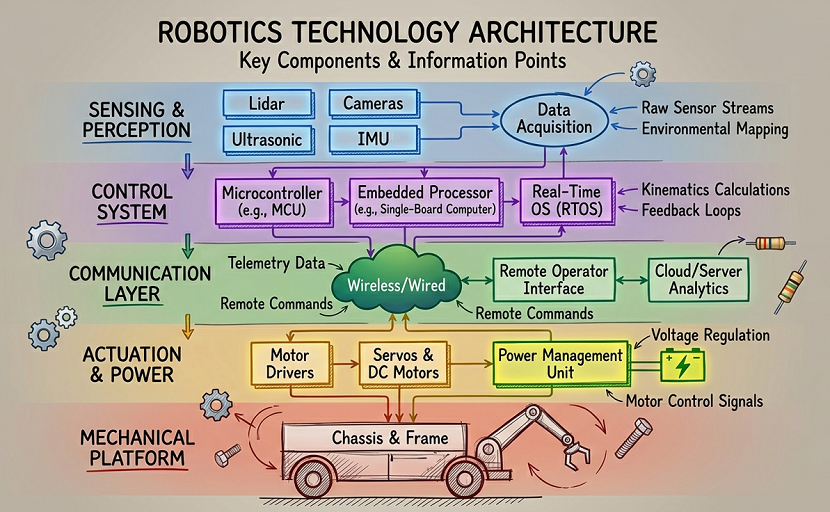
The vision of a world where machines perform tasks with precision, endurance, and intelligence is rapidly transitioning from the realm of science fiction to a tangible and transformative reality. The global Robotics Technology industry is a dynamic and expansive ecosystem where mechanical engineering, computer science, artificial intelligence, and sensor technology converge to create machines capable of automating a vast and growing range of human activities. This industry is no longer confined to the caged, heavy-lifting arms on a factory floor; it has diversified into a sprawling field that includes collaborative robots working alongside humans, autonomous mobile robots navigating warehouses, surgical robots performing delicate operations, and even social robots providing companionship. This evolution is driven by a global imperative for increased productivity, a need to perform tasks that are dangerous or undesirable for humans, and continuous breakthroughs in the underlying technologies that make robots smarter, safer, and more adaptable than ever before. The robotics industry is at the heart of the next industrial revolution, fundamentally reshaping manufacturing, logistics, healthcare, and a host of other sectors across the global economy.
The structure of the robotics technology industry is a complex value chain. At the foundation are the component manufacturers, who produce the essential building blocks of any robot: motors, actuators, gearboxes, controllers, and a vast array of sensors (such as cameras, lidar, and force-torque sensors). Above this layer are the robot manufacturers themselves. This segment is dominated by a handful of major industrial robotics giants, primarily from Japan and Europe, who produce the traditional robotic arms that are the workhorses of the manufacturing world. Alongside them is a rapidly growing and highly innovative group of companies that are developing new types of robots, such as collaborative robots (cobots), autonomous mobile robots (AMRs), and specialized service robots for industries like agriculture or healthcare. These manufacturers are the core of the industry, responsible for designing and building the physical machines.
The next critical layer is the software and AI developers. The physical robot is just a body; the software is its brain. This segment is where the most exciting innovations are happening. Companies are developing sophisticated software for robot control, simulation, and programming, as well as advanced AI and machine learning algorithms that give robots their "intelligence." This includes computer vision systems that allow robots to "see" and identify objects, navigation software that enables mobile robots to autonomously map and move through complex environments, and reinforcement learning techniques that allow robots to learn new tasks through trial and error. The development of more intuitive, user-friendly programming interfaces is also a key trend, lowering the barrier to entry and allowing non-experts to deploy and manage robots more easily.
Finally, the top layer of the industry consists of the system integrators, solution providers, and end-users. A robot manufacturer typically sells a base robot, but it is the system integrator who designs, builds, and installs a complete robotic solution for a specific application. They are the crucial link between the technology and the real-world problem. For example, an integrator might take a standard robotic arm, equip it with a custom gripper and a vision system, and program it to perform a specific task like packing boxes or welding a car frame. This part of the industry requires deep domain expertise in the end-user's industry. The end-users themselves, from automotive giants and e-commerce warehouses to hospitals and farms, are the ultimate consumers of the technology, and their specific needs and challenges are what drive the innovation and direction of the entire robotics industry.
Explore More Like This in Our Regional Reports:
Gcc Centralised Workstations Market

 Arabic
 French
 Spanish
 Portuguese
 Deutsch
 Turkish
 Dutch
Dutch
 Italiano
 Russian
 Romaian
 Portuguese (Brazil)
 Greek
Greek