


The Future of Decision-Making: Exploring Key Opportunities in the Data Analytics Market
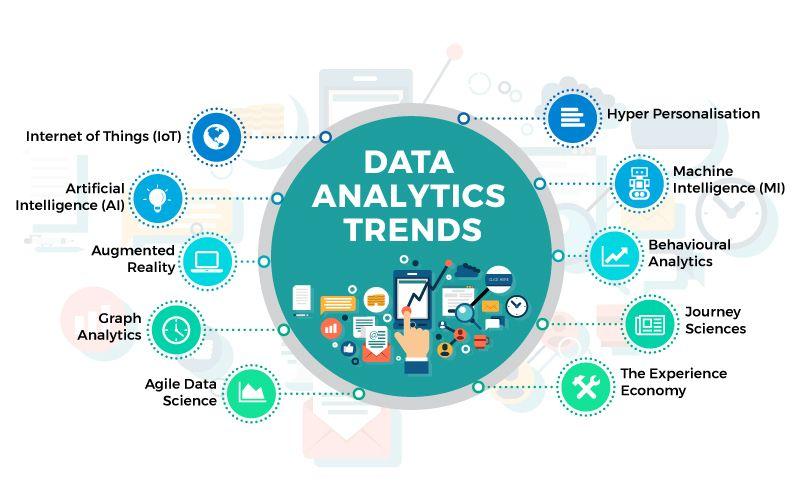
The data analytics market, while already a massive and transformative industry, is on the cusp of a new era of intelligence and accessibility that will embed data-driven insights into every facet of business and society. The future is rich with profound Data Analytics Market Opportunities that will move the field beyond dashboards and reports and towards truly automated and conversational intelligence. The single most significant of these opportunities is the rise of Augmented Analytics and Generative AI. This represents a paradigm shift in how users interact with data. Instead of requiring a user to be an analyst who can drag and drop fields to build a chart, augmented analytics allows a user to simply ask a question in natural, conversational language. A business user could type or speak a query like, "Compare our sales growth for Product A versus Product B in the European market over the past six months and tell me what the key drivers are." A generative AI engine would then not only generate the relevant charts and tables but would also produce a written narrative summary that explains the key insights, identifies anomalies, and even suggests potential next steps. This "data-as-a-conversation" model will truly democratize analytics, making sophisticated data insights accessible to everyone in an organization, regardless of their technical skills.
Another massive opportunity lies in the realm of real-time, streaming analytics. Traditional analytics is often based on batch processing, where data is collected and analyzed on an hourly or daily basis. This is too slow for many modern use cases. The opportunity is to build platforms that can analyze data "in-flight," as it is being generated, enabling instant decision-making. This is critical for applications in the Internet of Things (IoT), where a manufacturer needs to analyze real-time sensor data from a production line to detect a potential equipment failure in milliseconds. In e-commerce, streaming analytics can be used to detect fraudulent transactions as they happen or to update a user's personalization profile in real-time based on their clicks. In logistics, it can be used to continuously re-optimize delivery routes based on live traffic data. As the world becomes more instrumented and connected, the ability to process and act upon streaming data will move from a niche capability to a mainstream requirement, creating a huge market for real-time analytics platforms.
The increasing focus on data governance, privacy, and ethics presents a significant and high-value opportunity for the market. As organizations collect and use more data, they also face greater risks and regulatory burdens. This creates a strong demand for tools that can help them manage their data responsibly. The opportunity is to build comprehensive data governance platforms that are deeply integrated with the analytics stack. These platforms can help organizations automatically discover and classify sensitive data (like Personally Identifiable Information or PII) across their entire data estate. They can provide tools for managing data access policies, ensuring that only authorized users can see certain data. They can also provide a detailed data lineage, which visually tracks the journey of a piece of data from its source to its use in a final report, which is essential for auditing and building trust in the data. A new and emerging opportunity is in algorithmic transparency and bias detection, providing tools to help organizations understand how their machine learning models are making decisions and to identify and mitigate any potential biases, ensuring that their AI is fair and ethical.
Finally, there is a major opportunity to create more specialized, industry-specific analytics applications. While the general-purpose BI and analytics platforms are powerful, many industries have unique data types, workflows, and regulatory requirements that are not well-served by a one-size-fits-all tool. This creates an opportunity for vendors to build vertical-specific applications that come with pre-built data models, KPIs, and dashboards for a particular industry. For example, a healthcare analytics platform could come with pre-built connectors for Electronic Health Record (EHR) systems and pre-configured dashboards for monitoring hospital operational metrics like patient length of stay and readmission rates. A retail analytics platform could have built-in models for market basket analysis and customer lifetime value calculation. By providing these turnkey, industry-specific solutions, vendors can dramatically reduce the time-to-value for their customers and command a price premium for their deep domain expertise, creating a highly profitable and defensible market niche.
Top Trending Reports:

 English
 Arabic
 French
 Portuguese
 Deutsch
 Turkish
 Dutch
Dutch
 Italiano
 Russian
 Romaian
 Portuguese (Brazil)
 Greek
Greek