


Train Logistics Services Company for Cost-Efficient Freight
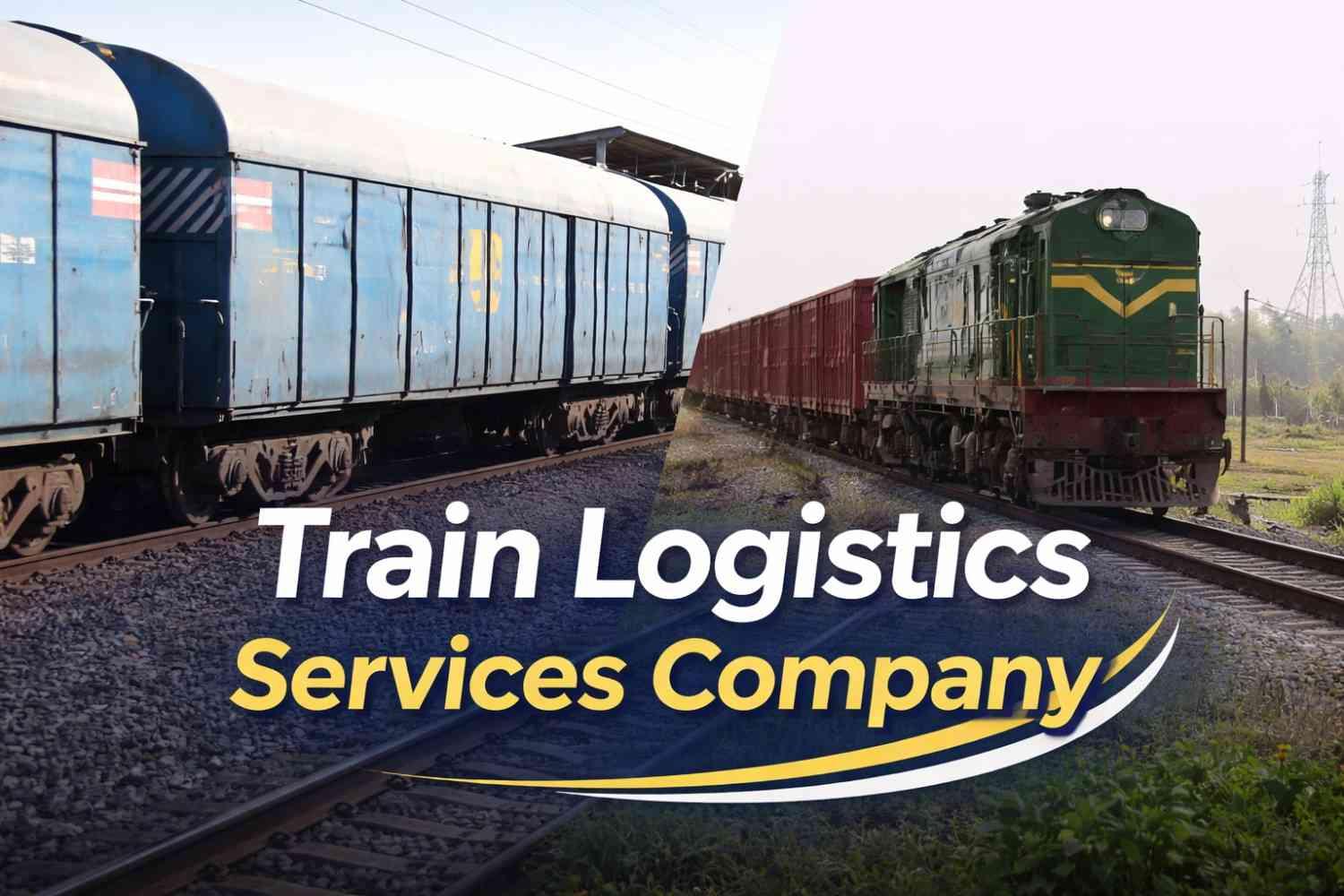
A shipment delay on a rail route rarely starts at the railway terminal. Most of the time, the problem begins days earlier with planning assumptions, inventory coordination, documentation gaps, or unrealistic delivery commitments. That is why selecting a train logistics services company is not simply a transportation decision. It becomes an operational decision that affects inventory availability, customer commitments, working capital, and supply chain stability.
Many organizations initially focus on freight cost because rail transportation is known for economical long-distance movement. However, after implementation begins, different challenges appear. Wagon availability changes, loading schedules shift, destination handling becomes a bottleneck, and suddenly the cheapest transportation plan becomes the most expensive operational mistake.
Key Takeaways
-
Rail freight savings disappear quickly when inventory planning is weak.
-
Terminal handling often creates bigger delays than rail transit itself.
-
Not every train logistics services company manages first-mile and last-mile operations effectively.
-
Capacity planning becomes critical during seasonal demand spikes.
-
Long-term operational consistency matters more than short-term freight discounts.
Why Rail Freight Decisions Become More Complex at Scale
When shipment volumes are small, transportation decisions appear straightforward. As volume increases across multiple regions, things become more complicated.
I have seen companies move from road transport to rail expecting immediate cost benefits. The calculations looked correct on paper. Freight costs reduced. Yet within months, warehouse teams started reporting inventory mismatches and dispatch teams struggled with scheduling changes.
The issue was never rail transportation itself. The problem was operational coordination.
A reliable train logistics services company understands that rail movement is only one part of the supply chain. Inventory planning, loading schedules, documentation, terminal management, and destination delivery all influence final performance.
One thing many teams underestimate is how tightly connected transportation and inventory management become when rail freight enters the picture. Longer lead times require better forecasting. Small planning mistakes that may go unnoticed in road transport often become visible much faster in rail-based operations.
This is where many organizations encounter unexpected costs despite achieving lower freight rates.
What Experienced Businesses Evaluate Before Selecting a Rail Logistics Partner
Companies that have managed large-scale freight operations usually assess logistics providers differently. Instead of focusing only on pricing, they look deeper into operational capabilities.
Some practical evaluation points include:
-
Terminal handling capabilities across major routes
-
Experience with multi-location freight movement
-
First-mile and last-mile coordination processes
-
Visibility and shipment tracking systems
-
Ability to manage peak season capacity constraints
A strong rail logistics company in India is rarely selected because it offers the lowest quotation. It is selected because operational teams trust its ability to manage disruptions when conditions change unexpectedly.
The real test of a logistics provider does not happen during normal operations. It happens when schedules shift, capacity becomes limited, or customer demand suddenly increases.
The Hidden Cost Factors Most Businesses Discover Later
Freight quotations often create a misleading sense of cost certainty.
A company may compare road transport with affordable train shipment services and conclude that rail offers substantial savings. In many cases, that assumption is correct. However, the operational environment around rail transportation introduces variables that are often ignored during initial planning.
Terminal storage charges, detention costs, inventory holding expenses, delayed unloading, coordination failures, and secondary transportation requirements can gradually increase total logistics expenditure.
Most planning timelines look reasonable until real execution begins.
In one implementation I observed, the transportation cost reduction target was achieved within the first quarter. Yet warehouse occupancy increased because inventory arrived in larger batches than expected. Storage costs rose significantly, offsetting part of the transportation savings.
This does not mean rail freight was the wrong decision. It simply highlights the importance of evaluating the complete operational picture rather than focusing exclusively on transportation rates.
A capable train logistics services company helps businesses understand these trade-offs before contracts are finalized.
Why Long-Distance Rail Logistics Requires Better Operational Discipline
Rail transportation works exceptionally well for large-volume and long-distance freight movement. Yet it demands more planning discipline than many organizations expect.
Unlike road transport, where adjustments can often be made quickly, rail operations depend on schedules, terminal processes, route planning, and multiple coordination points. Small communication gaps can create larger operational consequences.
This is why long-distance rail logistics solutions often succeed when inventory teams, warehouse teams, transportation planners, and logistics partners operate from a shared execution plan.
The technical setup is rarely the hardest part. Managing long-term operational consistency usually is.
Many companies initially believe implementation is complete once transportation routes are established. In reality, the operational learning phase begins after shipments start moving regularly.
Shipment forecasting becomes more important. Inventory allocation becomes more important. Internal communication becomes more important.
Organizations that underestimate these requirements often struggle during expansion.
What Separates Reliable Providers from Average Providers
A dependable train logistics services company generally demonstrates certain characteristics that become visible over time rather than during sales discussions.
The strongest providers tend to maintain operational transparency even when problems occur. They communicate route changes early. They discuss capacity limitations honestly. They provide realistic timelines instead of optimistic promises.
Average providers frequently focus on transaction execution. Strong providers focus on operational continuity.
This distinction becomes increasingly important for businesses managing manufacturing supply chains, retail distribution networks, industrial shipments, and large-scale inventory movement.
Many experienced logistics managers eventually prioritize predictability over marginal cost savings. Missing a customer commitment often costs more than paying slightly higher transportation rates.
That reality becomes very clear after a few large-scale disruptions.
Businesses searching for railway logistics services, cost-effective train shipment delivery, or a dependable third-party transportation partner often discover that operational reliability has a greater impact on profitability than small freight-rate differences.
Conclusion
My view is simple. Too many organizations evaluate rail logistics providers as transportation vendors when they should be evaluating them as operational partners.
The most common mistake is selecting a provider primarily on freight pricing while overlooking execution capability, coordination processes, and scalability. Those weaknesses usually appear months later when shipment volumes increase.
A useful operational takeaway is to assess how a provider handles disruptions rather than how it performs during normal conditions.
As supply chains become more interconnected, businesses will rely increasingly on integrated rail networks. The companies that benefit most will be those that choose logistics partners based on long-term operational performance rather than short-term transportation savings.
FAQs
1. Is rail freight cheaper than road transportation for long distances?
Ans. In many cases, yes. Rail transport often offers lower transportation costs for large-volume and long-distance freight. However, total logistics costs should include storage, handling, and inventory-related expenses.
2. How do I choose the right train logistics services company?
Ans. Evaluate operational capability, route coverage, terminal handling experience, visibility systems, and disruption management processes. Freight rates should be only one part of the decision.
3. What industries benefit most from railway logistics services?
Ans. Manufacturing, steel, cement, FMCG, retail distribution, industrial goods, and bulk commodity sectors typically gain the most value from rail-based freight movement.
4. Are affordable train shipment services suitable for urgent deliveries?
Ans. Rail works best for planned freight movement. For highly time-sensitive shipments, businesses often combine rail transportation with road-based last-mile delivery strategies.
5. What are the biggest risks in long-distance rail logistics solutions?
Ans. Capacity constraints, terminal delays, documentation issues, inventory planning mistakes, and poor coordination between multiple supply chain stakeholders are common operational risks.

 English
 Arabic
 French
 Spanish
 Deutsch
 Turkish
 Dutch
Dutch
 Italiano
 Russian
 Romaian
 Portuguese (Brazil)
 Greek
Greek