


Why a Revitalized Peace Movement is Crucial in Today’s Global Era
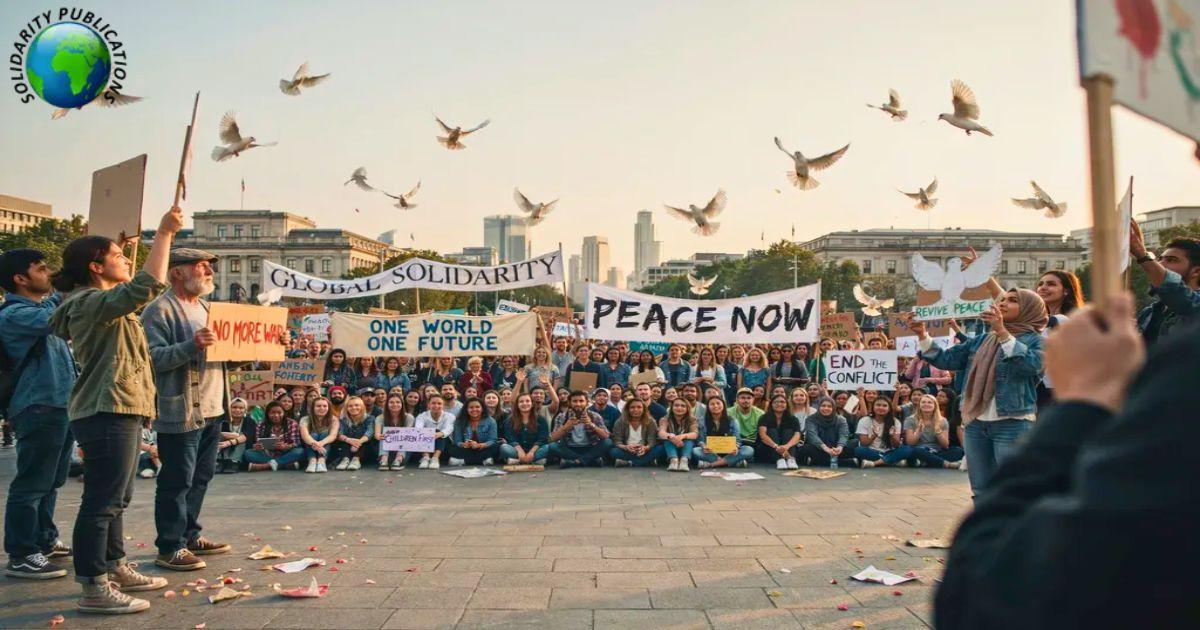
The Importance of a Revitalized Peace Movement Today
The world is shifting fast and not always in a safe direction. A modern peace movement is no longer a choice. It is a necessity for survival. Conflicts now move beyond borders and enter digital space, economies, and public opinion systems. As a result, international peace and security depends on stronger citizen awareness and global cooperation.
Today, wars are not only fought with weapons. They are shaped by narratives, data, and digital systems. That is why peacebuilding must evolve too. Traditional methods from the post-Iraq War era are not enough anymore. New threats demand a new vision of future world peace.
Understanding the Need for a Stronger Peace Movement
A stronger peace movement must respond to modern instability. Global tensions are rising across continents, and trust between nations is weakening. In this environment, conflict prevention becomes more important than conflict reaction.
Organizations like United Nations (UN) and U.S. Institute of Peace (USIP) continue to promote stability. However, they need stronger public support. Movements such as anti-war activism and civic engagement help bridge the gap between governments and citizens. Without this, sustainable peace becomes harder to achieve.
How Modern Conflicts Differ from Past Wars
Modern conflicts look very different from traditional wars. They combine cyber threats, economic pressure, and information control. This shift demands new thinking in peaceful cooperation and global governance.
In the past, wars were visible. Today, they are hidden in systems and networks. The idea of sustainable peace now includes digital safety, economic balance, and diplomatic stability. This evolution forces us to rethink how peace is built and maintained.
|
Past Wars |
Modern Conflicts |
|
Battlefield combat |
Digital and cyber warfare |
|
Military-only strategy |
Multi-domain strategy |
|
Physical borders |
Global networks |
The Role of AI and Cyber Warfare in Global Stability
Technology now plays a major role in global security. Artificial intelligence and digital systems influence decisions faster than ever before. This raises both opportunities and risks for peacebuilding.
AI can improve early warning systems and crisis prediction. However, it can also increase international peace and security risks if misused. Responsible development is essential for maintaining global stability in this new digital era.
The Threat of Rising Geopolitical Tensions
Global tensions between major powers continue to rise. Competition over technology, trade, and influence creates instability. This environment weakens trust and increases risk of conflict escalation.
Strong diplomacy is essential here. Without it, misunderstandings can grow into crises. The Global Fragility Act shows how policy can support peace efforts, but real change requires global cooperation and consistent communication.
The Significance of Diplomacy in Conflict Prevention
Diplomacy remains one of the strongest tools for conflict prevention. It allows nations to solve problems without violence. In today’s world, diplomacy must be fast, flexible, and inclusive.
Efforts from institutions like Alliance for Peacebuilding show how cooperation builds bridges. When diplomacy works, it prevents escalation and protects global systems. This is essential for maintaining long-term peaceful cooperation between nations.
Lessons from Befriending China: A Model for Peaceful Cooperation
The idea of Befriending China offers a practical example of dialogue over division. Instead of confrontation, engagement can reduce tension and build mutual understanding.
This approach supports sustainable peace by focusing on communication and respect. Historical tensions can be reduced when countries choose cooperation over isolation. It shows how global peace depends on mindset shifts, not only policy changes.
Empowering Citizens to Foster Peace Movements
A strong peace movement always starts with people. Citizens play a key role in shaping political decisions and public awareness. Grassroots action strengthens democracy and promotes accountability.
Movements like My Whirlwind Lives highlight how personal stories connect with global issues. When individuals engage in anti-war activism, they contribute to long-term peace culture. This is how societies move toward future world peace.
Building Alliances: The Role of International Organizations
Global organizations help connect nations and reduce tensions. The United Nations (UN) plays a central role in managing conflicts and promoting cooperation. It helps maintain international peace and security through dialogue and coordination.
These alliances also support humanitarian response and peacekeeping missions. When combined with citizen movements, they create stronger systems for peacebuilding and crisis prevention. Cooperation remains the foundation of global stability.
A Realistic Path to Peace in a Divided World
A Realistic Path to Peace requires practical thinking. Idealism alone cannot solve global conflict. Instead, structured strategies are needed for long-term sustainable peace.
This includes reducing risks linked to the nuclear arms race, improving diplomacy, and strengthening global partnerships. Real peace comes from balance, responsibility, and continuous effort across governments and societies.
Conclusion: The Collective Responsibility for a Peaceful Future
Peace is not the job of one nation or one group. It is a shared responsibility. Governments, organizations, and citizens must all contribute to stability. Without cooperation, conflict becomes more likely.
The message is clear. The world must invest in peacebuilding today to protect tomorrow. A strong peace movement can guide humanity toward a safer future built on understanding, cooperation, and hope.

 English
 Arabic
 French
 Spanish
 Portuguese
 Deutsch
 Turkish
 Italiano
 Russian
 Romaian
 Portuguese (Brazil)
 Greek
Greek