


Why Every Community Needs a Youth Economic Literacy Program
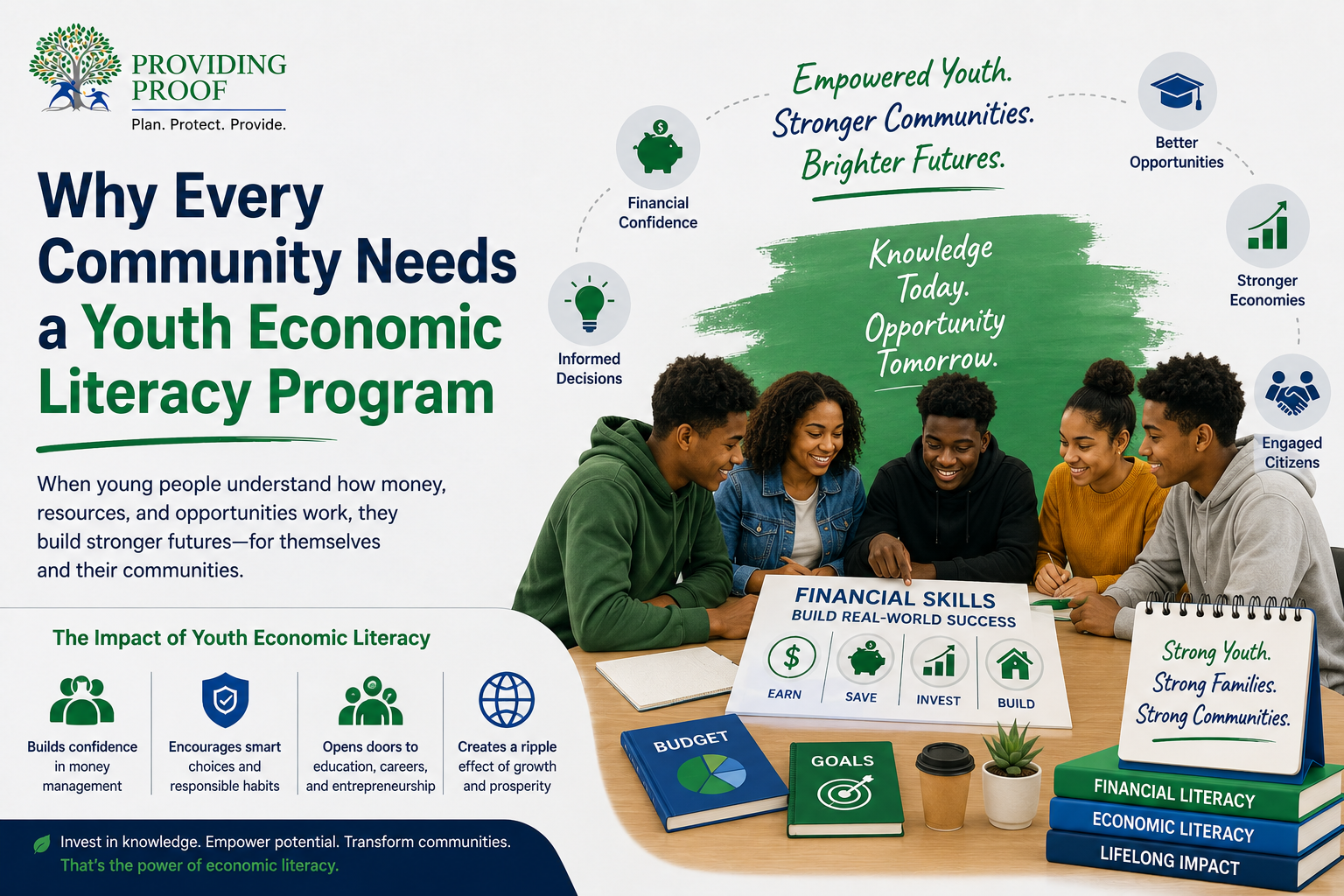
Imagine a teenager stepping into adulthood without knowing how to manage a bank account, understand a paycheck, or plan for the future. This is the reality for millions of young people around the world — and it is a problem that communities can no longer afford to ignore.
Financial literacy is not just a personal skill. It is a community asset. When young people grow up with a strong foundation in financial literacy, they make better decisions, contribute more to their local economies, and break cycles of poverty. That is exactly why investing in a youth economic literacy program is one of the most powerful steps a community can take.
In this article, we will explore what financial literacy means, why economic literacy matters for all ages, and how structured programs are transforming communities one young person at a time.
What Is Financial Literacy — And Why Does It Matter?
At its core, financial literacy is the ability to understand and effectively use financial skills — including personal financial management, budgeting, investing, and saving. It is the knowledge that helps people make smart money decisions every day.
But financial literacy goes beyond just numbers. It also includes understanding how the broader economy works — which is where economic literacy comes in. Economic literacy refers to the ability to understand basic economic principles such as supply and demand, inflation, interest rates, and how markets function.
Together, financial literacy and economic literacy give individuals the tools to navigate the modern world with confidence. Without them, people are more likely to fall into debt, make poor investment choices, and struggle with financial insecurity.
The question is: when should this education begin? The answer is — as early as possible.
The Gap in Financial Education for Youth
Despite its importance, financial education is rarely taught in schools with the depth it deserves. Many students graduate without understanding basic concepts like compound interest, credit scores, or how to file taxes. By the time they become adults, the knowledge gap is already wide.
This is where a dedicated youth economic literacy program makes all the difference. These programs are specifically designed to teach young people — from children to teenagers — the financial and economic skills they need to succeed in life.
A well-designed program covers topics such as:
-
Budgeting and saving habits
-
Understanding income and expenses
-
The basics of banking and credit
-
Introduction to investing and compound growth
-
How the economy affects everyday life
-
Goal setting and long-term financial planning
When these topics are taught in a structured, engaging, and age-appropriate way, they stick. And when they stick, they change lives.
Why Youth Economic Literacy Programs Benefit the Entire Community
The benefits of financial literacy for adults are well-documented — but what happens when we invest in young people before they reach adulthood? The impact multiplies.
1. Breaking the Cycle of Financial Hardship
Many families pass down financial habits — both good and bad — from generation to generation. A youth economic literacy program can interrupt that cycle. When children learn healthy money habits early, they are far less likely to fall into debt or financial instability as adults.
2. Building Stronger Local Economies
A financially literate population saves more, spends wisely, and invests in local businesses. When communities prioritize economic literacy, they create a generation of informed consumers, responsible entrepreneurs, and engaged citizens who strengthen the local economy from the ground up.
3. Reducing Inequality
Financial knowledge has historically been unevenly distributed. Wealthier families tend to have better access to financial education, while lower-income households often do not. Community-based youth economic literacy programs level the playing field, giving every child — regardless of background — the tools to build a secure financial future.
4. Preparing Youth for Real-World Challenges
From student loans to first jobs and rental agreements, young adults face complex financial decisions almost immediately after turning 18. A structured youth economic literacy program prepares them for these moments — not after the fact, but well in advance.
Financial Literacy for Adults: It Is Never Too Late
While youth education is critical, it is equally important to recognize that financial literacy for adults is just as necessary. Many adults are managing households, paying mortgages, raising children, and planning for retirement — often without the financial knowledge they need.
Community programs that offer financial literacy for adults alongside youth programs create an environment where families learn and grow together. Parents who become more financially literate reinforce what their children are learning — and begin making better decisions themselves.
This dual approach — targeting both youth and adults — is one of the most effective ways a community can drive lasting economic change.
What Makes a Great Youth Economic Literacy Program?
Not all financial education programs are created equal. The most effective youth economic literacy programs share these key qualities:
-
Age-appropriate curriculum: Content should match where a young person is developmentally, from simple saving concepts for children to investment basics for teenagers.
-
Interactive and engaging delivery: Games, simulations, real-world scenarios, and hands-on activities make learning stick.
-
Culturally relevant content: Programs are most effective when they reflect the lived experiences and economic realities of the communities they serve.
-
Ongoing support: One-off workshops are rarely enough. Long-term, consistent programs produce the best results.
-
Community involvement: When parents, schools, and local organizations collaborate, the impact is far greater.
How Communities Can Get Started
Starting a youth economic literacy program in your community does not have to be overwhelming. Here is a simple roadmap:
1. Identify the need: Survey local schools and families to understand the financial knowledge gaps in your community.
2. Partner with organizations: Many nonprofits, banks, and government agencies already offer financial education resources and may be willing to collaborate.
3. Train educators: Teachers and community volunteers need proper training to deliver financial literacy content effectively.
4. Start small and scale: Begin with a pilot program in one school or neighborhood, measure results, and expand from there.
5. Include adults: Design parallel programming for parents and caregivers to maximize community-wide impact.
Conclusion: Invest in Financial Literacy Today for a Stronger Tomorrow
The connection between financial literacy, economic literacy, and community well-being is undeniable. When we equip young people with the tools to understand money and the economy, we invest in a future that is more stable, more equitable, and more prosperous for everyone.
A youth economic literacy program is not a luxury — it is a necessity. And when paired with financial literacy programs for adults, it becomes a transformational force for entire communities.
The time to act is now. Whether you are a parent, educator, community leader, or policymaker, you have the power to champion financial education in your community. Because when young people thrive financially, everyone benefits.

 English
 Arabic
 French
 Spanish
 Portuguese
 Deutsch
 Turkish
 Dutch
Dutch
 Italiano
 Russian
 Romaian
 Greek
Greek