


Human Plasma Collection & Plasma Fractionation Tech
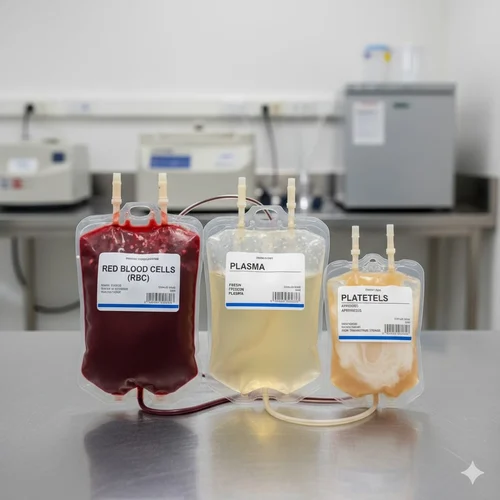
The journey from a donor's arm to a patient's vein spans months, crosses continents, and involves thousands of people. Human Plasma Collection Services are the beginning of this journey, where healthy donors contribute plasma that will eventually become life-saving therapies. Plasma Fractionation Technology is the end of the manufacturing journey, where pooled plasma is separated into its constituent proteins—albumin, immunoglobulins, clotting factors—and purified to pharmaceutical grade. Between collection and fractionation lies an intricate supply chain: plasma must be frozen, shipped, stored, pooled, tested, processed, and quality-released. Understanding the end-to-end process is essential for healthcare administrators, procurement professionals, and policymakers who must ensure reliable supply of plasma derivatives while maintaining safety and quality. For a comprehensive understanding of the plasma industry, from donor recruitment to final product, the detailed analysis on Human Plasma Collection Services provides essential insights.
H2: The Complete Supply Chain
H3: Collection and Processing
Human Plasma Collection Services operate collection centers where donors undergo screening and plasmapheresis (or whole blood donation). Collected plasma is labeled with a unique donation number, sampled for infectious disease testing, and frozen within 24 hours. Frozen plasma is stored at ≤-20°C until shipment. Plasma from donors who later test positive for an infectious disease is removed from inventory; plasma from donors who clear screening is grouped into lots for further testing.
Plasma is shipped in refrigerated trucks or containers, maintaining the cold chain. International shipments require customs clearance and compliance with import/export regulations for biological materials. Plasma from multiple collection centers is consolidated at fractionation facilities.
H3: Fractionation and Purification
Plasma Fractionation Technology begins with thawing and pooling plasma from 1,000-10,000 donations. The pool is tested for infectious disease markers; if any positive, the entire pool is discarded (though this is rare with modern donor screening). The Cohn cold ethanol fractionation process separates the pool into fractions: cryoprecipitate (for factor concentrates) and supernatant (for immunoglobulins, albumin, and other proteins). Chromatography further purifies individual proteins.
Each fraction undergoes multiple viral inactivation steps: solvent/detergent (enveloped viruses), pasteurization (60°C for 10 hours), nanofiltration (size exclusion), and/or low pH incubation (for immunoglobulins). The purified protein is formulated into final product (liquid or lyophilized), filled into vials or syringes, labeled, and packaged.
H2: Quality Systems and Traceability
The plasma fractionation industry operates under Good Manufacturing Practice (GMP) regulations. Each batch must be tested for potency, purity, identity, sterility, endotoxin, and viral safety. Only batches meeting all specifications are released for distribution.
Plasma Fractionation Technology incorporates full traceability: each final product vial is labeled with a lot number that traces back to the plasma pool and, through records, to individual donors. If a donor later tests positive for a bloodborne pathogen, lookback notifications can identify recipients of products from that donor (though the combined effect of pooling and viral inactivation makes transmission extremely unlikely).
Human Plasma Collection Services also maintain donor records, including consent forms, screening questionnaires, and test results. Donors are compensated in the US (where most source plasma is collected), and compensation records are maintained for tax and regulatory purposes.
H3: Supply and Demand Imbalances
The plasma industry faces chronic supply pressures. Global immunoglobulin demand grows 8-10% annually, driven by expanded indications and increased diagnosis of primary immunodeficiency. Plasma Fractionation Technology capacity has expanded with new fractionation facilities, but lead times are long (5-7 years from planning to operation). Human Plasma Collection Services have also expanded, with new collection centers opening in underserved regions, but donor recruitment and retention remain challenges.
Periodic shortages occur, particularly of immunoglobulin. During shortages, healthcare providers must implement allocation plans, prioritizing patients with life-threatening indications (primary immunodeficiency, Guillain-Barré syndrome, Kawasaki disease) over less urgent indications (dermatomyositis, inclusion body myositis). Subcutaneous immunoglobulin (which uses lower doses and can be self-administered) may be substituted for intravenous immunoglobulin during shortages.
H2: Future Directions
The future of the plasma industry includes increased collection in emerging markets (China, Brazil, India) as regulatory frameworks mature and healthcare infrastructure develops. Recombinant alternatives to plasma-derived products (recombinant factor concentrates, recombinant albumin, recombinant C1-INH) will reduce dependence on plasma for some products, but immunoglobulin—the largest product by volume—cannot be easily replaced recombinantly due to the diversity of natural antibodies.
Pathogen reduction technology for plasma (amotosalen/UVA, riboflavin/UV) could reduce the need for donor testing and enable use of plasma from regions with higher infectious disease prevalence. For Human Plasma Collection Services, investment in donor retention (compensation, recognition, convenience) and new donor recruitment (education, community outreach) will be essential to meet growing demand. For Plasma Fractionation Technology, continuous manufacturing (rather than batch processing) could improve efficiency and reduce costs. For healthcare planners and industry executives, the market research available on Plasma Fractionation Technology offers comprehensive guidance.

 English
 Arabic
 French
 Spanish
 Portuguese
 Turkish
 Dutch
Dutch
 Italiano
 Russian
 Romaian
 Portuguese (Brazil)
 Greek
Greek