


Which Safety Equipment for Fire Helps Protect Lives and Assets?
Most people never expect a fire to happen where they live or work. It is one of those risks that feels distant until an incident occurs nearby. A small electrical fault, an overheated machine, or even a forgotten appliance can create a situation that changes within minutes.
A facility supervisor once recalled how a routine workday suddenly turned stressful when smoke began appearing from a storage area. At first, employees assumed it was a minor electrical issue. Within moments, however, the smell became stronger and visibility started to decrease. Fortunately, the building was equipped with fire safety equipment, and trained employees were able to respond while others evacuated safely.
The experience served as a reminder that fire protection is not based on luck. It depends on preparation, awareness, and having the right tools available when they are needed most.
When discussing Safety Equipment for Fire, many people immediately think about fire extinguishers. While extinguishers are important, they represent only one part of a much larger safety system designed to protect people, buildings, equipment, and valuable assets.
“The best time to think about fire safety is long before an emergency begins.”
Why Fire Safety Equipment Matters More Than People Realize
Fire incidents often develop much faster than expected. What begins as a small spark can spread to nearby materials, creating a situation that becomes increasingly difficult to control.
One reason fire safety equipment is so important is that it helps bridge the gap between the start of a fire and the arrival of emergency responders. Those first few minutes often determine how much damage occurs and how safely people can leave the affected area.
Without proper equipment, occupants may have limited warning and fewer options for responding effectively. With appropriate protection measures in place, there is a greater opportunity to control risks, improve evacuation, and reduce potential losses.
For this reason, fire safety equipment continues to play a central role in residential, commercial, and industrial environments.
Fire Extinguishers and Their Role in Early Fire Control
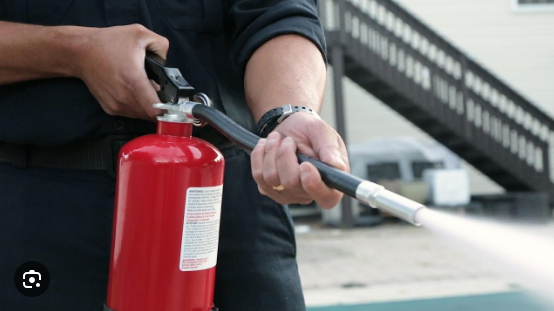
Walk through almost any office, shopping center, school, warehouse, or apartment building and you will probably notice fire extinguishers mounted on walls. Their presence is so common that many people rarely pay attention to them.
Despite their ordinary appearance, fire extinguishers perform an important function. They provide an immediate response option when a fire is still small enough to be controlled.
Different extinguishers are designed for different situations. Some are suitable for materials such as paper and wood, while others are intended for electrical equipment or flammable liquids. The effectiveness of an extinguisher depends on matching the equipment to the type of hazard present.
When used correctly during the early stages of a fire, extinguishers can help prevent flames from spreading and reduce the potential for extensive damage.
How Fire Alarm Systems Protect Building Occupants
One of the biggest challenges during a fire is ensuring that people become aware of the danger quickly. A fire alarm system addresses this challenge by providing immediate notification when signs of a fire are detected.
In large buildings, occupants may be working in different rooms, on separate floors, or in areas where visibility is limited. Without an alarm system, valuable time may be lost before people realize that an emergency exists.
Alarm systems create a building-wide warning that encourages prompt action. This early notification helps improve evacuation efforts and allows emergency procedures to begin sooner.
The importance of alarms becomes especially clear in facilities where large numbers of people gather daily.
The Value of Smoke Detection Systems
Many people associate fire danger with visible flames. In reality, smoke often becomes a serious threat long before flames spread throughout a building.
Smoke can reduce visibility, create breathing difficulties, and make evacuation more challenging. This is why smoke detection systems remain a critical component of fire protection.
These systems identify smoke particles and activate warnings before conditions become more dangerous. The additional time provided by early detection can make a significant difference during an emergency.
Whether installed in homes, offices, hotels, hospitals, or educational facilities, smoke detectors contribute to faster awareness and safer responses.
Fire Suppression Systems in High-Risk Environments
Certain environments require protection beyond portable extinguishers and alarms. Facilities containing sensitive equipment, valuable inventory, or specialized operations often rely on fire suppression systems.
Unlike extinguishers that require manual operation, suppression systems are designed to respond automatically when specific conditions are detected. Their purpose is to control or suppress fire growth before it spreads extensively.
Data centers, manufacturing plants, industrial facilities, and commercial kitchens frequently use suppression systems because of the unique risks associated with their operations.
In these environments, automatic protection can help reduce downtime and limit damage to important assets.
Why Emergency Lighting Plays a Critical Role
During a fire emergency, power interruptions can occur unexpectedly. When this happens, people may struggle to locate exits, stairwells, or evacuation routes.
Emergency lighting helps maintain visibility when normal lighting systems fail. It provides guidance during evacuation and reduces confusion in stressful situations.
Many people underestimate the value of emergency lighting because it remains inactive during normal operations. However, its importance becomes immediately apparent when visibility conditions change.
Buildings designed with emergency lighting often provide a safer environment during evacuation procedures.
Fire Safety Signage Helps People Make Faster Decisions
During an emergency, people often look for guidance. Clear signage helps provide that direction.
Exit signs, equipment location markers, and evacuation route indicators help occupants understand where to go and what actions to take. In large buildings, this guidance becomes especially valuable because not everyone is familiar with the layout.
Effective signage works alongside alarms, lighting systems, and emergency procedures to support safer evacuations.
Although signs may seem simple, they contribute to a coordinated approach to fire safety.
“Clear information can be just as valuable as emergency equipment during a crisis.”
Understanding the Long-Term Importance of Maintenance
Installing fire safety equipment is only part of the process. Maintaining that equipment is equally important.
Over time, equipment can experience wear, environmental exposure, and operational issues. Fire extinguishers may require inspection. Detection systems need testing. Alarm systems must be checked regularly to verify proper performance.
A piece of equipment that appears functional may not perform as expected if maintenance has been neglected.
Regular inspections help identify issues early and support continued reliability. For many organizations, maintenance forms the foundation of long-term fire preparedness.
Looking Beyond Cost When Evaluating Fire Protection
People often compare prices when evaluating fire safety equipment. While budgeting is an important consideration, cost should not be the only factor influencing decisions.
For example, discussions about fire cylinder price in pakistan frequently focus on purchase costs. However, the overall value of fire protection extends beyond the initial investment.
Factors such as suitability, reliability, maintenance requirements, and expected performance often have a greater impact over time.
The most effective fire protection strategies consider both cost and long-term effectiveness rather than focusing exclusively on short-term savings.
Creating a Safer Environment Through Preparedness
Fire safety is not achieved through a single product or system. It results from combining multiple layers of protection that work together to reduce risks and improve emergency response.
Fire extinguishers help control small fires. Smoke detectors provide early warning. Alarm systems notify occupants. Emergency lighting supports evacuation. Suppression systems help control fire growth in specialized environments.
When these measures are combined with training, maintenance, and awareness, they create a stronger foundation for safety.
Preparedness does not eliminate every risk, but it improves the ability to respond effectively when unexpected situations occur.
Comparison Table: Common Fire Safety Equipment and Their Purpose
|
Equipment |
Main Function |
Typical Application |
Benefit to Occupants |
Benefit to Assets |
|
Fire Extinguisher |
Controls small fires |
Offices, warehouses, schools |
Improves immediate response |
Helps limit damage |
|
Smoke Detector |
Detects smoke early |
Homes, offices, hotels |
Provides early warning |
Reduces fire spread risk |
|
Fire Alarm System |
Alerts occupants |
Commercial buildings |
Supports evacuation |
Improves emergency response |
|
Fire Suppression System |
Controls fire automatically |
Data centers, industrial sites |
Enhances protection |
Protects valuable equipment |
|
Emergency Lighting |
Illuminates exit routes |
Public and commercial buildings |
Improves evacuation safety |
Supports emergency operations |
Frequently Asked Questions
1. What is the most common fire safety equipment found in buildings?
Fire extinguishers, smoke detectors, and fire alarm systems are among the most commonly installed fire protection tools.
2. Why are smoke detectors important?
They provide early warning by identifying smoke before a fire becomes more severe, allowing occupants more time to respond.
3. Do fire extinguishers stop every fire?
No. Fire extinguishers are designed primarily for controlling small fires during their early stages.
4. Why does fire safety equipment require maintenance?
Regular maintenance helps ensure that equipment remains operational and reliable during emergencies.
5. How does fire safety equipment protect assets?
By detecting, controlling, or slowing the spread of fire, safety equipment can reduce damage to buildings, inventory, machinery, and important property.
Final Thoughts
Fire safety equipment plays a valuable role in protecting both lives and assets. While different tools serve different purposes, they all contribute to a common goal: reducing risks and improving preparedness.
From extinguishers and smoke detectors to alarm systems and emergency lighting, each component adds another layer of protection. Together, these measures help create safer environments where people can respond more effectively to unexpected situations.
The most successful fire safety strategies are not built around a single product. They are built around preparation, awareness, maintenance, and a commitment to protecting what matters most.
“Safety is rarely the result of one decision. It is usually the result of many good decisions made over time.”

 English
 Arabic
 French
 Spanish
 Portuguese
 Deutsch
 Turkish
 Dutch
Dutch
 Italiano
 Russian
 Romaian
 Portuguese (Brazil)