


Magnesium Alloy Vehicle Parts: Revolutionizing Automotive Performance, Efficiency, and Durability
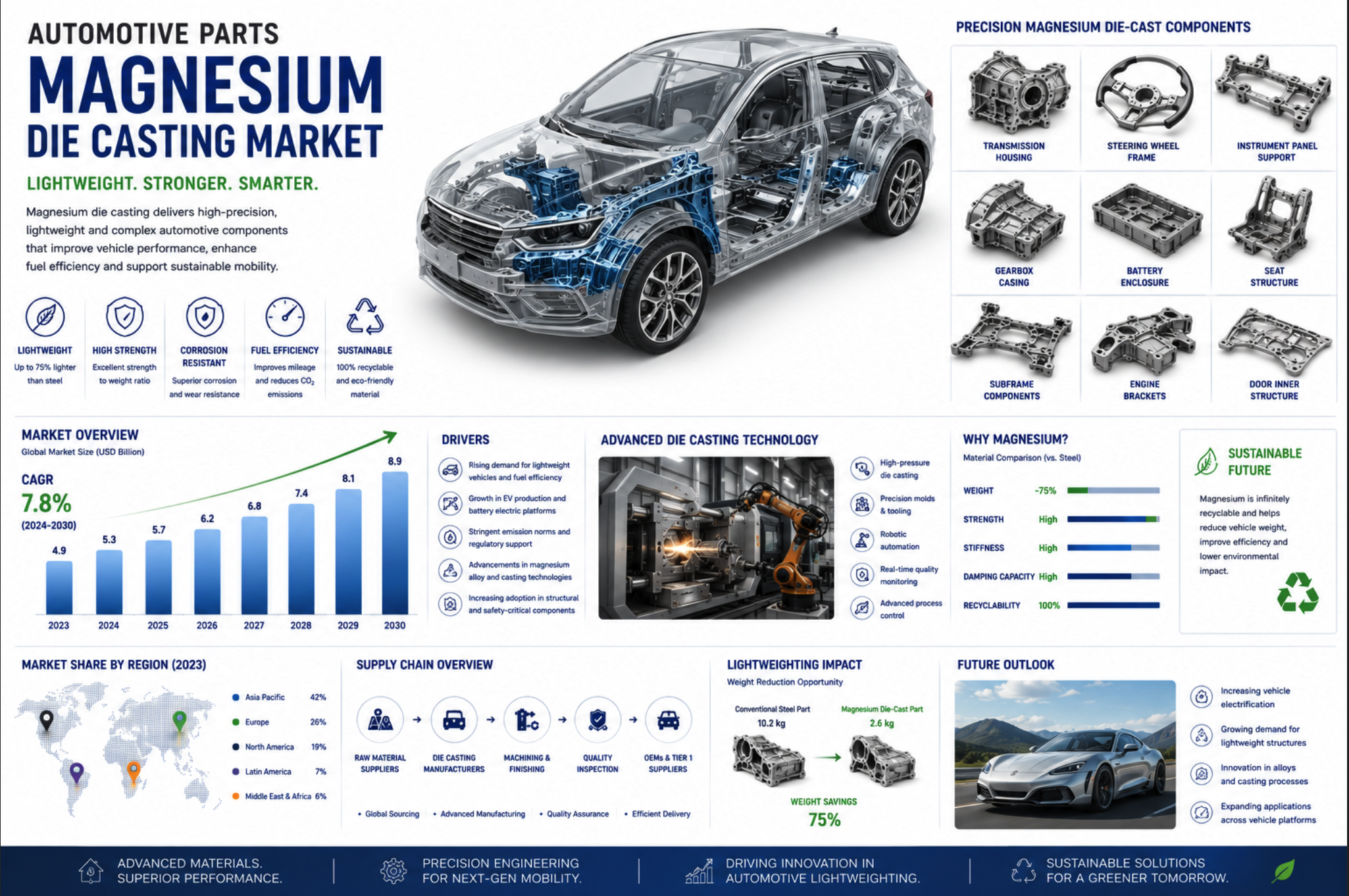
The application of Magnesium Alloy Vehicle Parts has expanded far beyond simple cosmetic trims to encompass critical structural and functional systems that define modern vehicle performance and safety. Modern vehicles now feature magnesium alloys in steering wheel frames, instrument panel brackets, seat frames, engine cradles, transmission casings, and even large body panels. The global market for these components is robust, valued at $5.33 billion in 2024 and projected to surge to $9.5 billion by 2035, reflecting a growing recognition of magnesium's superior engineering properties. This demand is heavily influenced by the urgent need for fuel-efficient lightweight vehicle design, as every kilogram saved contributes directly to lower emissions, improved performance, and enhanced driving dynamics. The automotive industry's shift toward electrification has further accelerated the adoption of magnesium components.
Magnesium alloys offer a unique combination of high specific strength, excellent damping capacity, and good castability, making them ideal for parts that must withstand dynamic loads while minimizing mass. In engine components, for instance, magnesium reduces reciprocating mass, leading to smoother operation, improved fuel economy, and reduced vibration. The material's inherent vibration-damping characteristics also enhance passenger comfort by reducing noise, vibration, and harshness (NVH) levels inside the cabin, contributing to a more refined driving experience. These alloys are particularly effective in powertrain applications where thermal management and mechanical stress are critical, outperforming many traditional materials in durability tests. The growing demand for Magnesium Alloy Vehicle Parts is a direct response to the automotive industry's lightweighting imperatives and the need for components that can withstand the demanding conditions of modern vehicle operation.
The adoption of magnesium alloy parts is particularly pronounced in the new energy vehicle (NEV) segment. As automakers strive to maximize the range of electric vehicles, they are utilizing dozens of magnesium alloy components to shave off crucial kilograms. Every 100 kilograms of weight saved can extend an EV's range by several miles, addressing the primary concern of range anxiety among consumers. Furthermore, the high-pressure die casting process allows these alloys to be formed into complex, thin-walled geometries that were previously unattainable with steel or even aluminum. This precision manufacturing capability ensures that components meet the exacting tolerances required for modern automotive applications, including tight dimensional control and excellent surface finish. The integration of magnesium parts into EV platforms represents a significant advancement in automotive engineering.
However, the widespread use of magnesium alloys has historically been hindered by concerns regarding corrosion resistance and cost. Today, advanced surface treatment technologies and the development of new alloy compositions, such as magnesium-aluminum-zinc (AZ) and magnesium-rare earth (RE) series, are effectively mitigating these issues. These innovations are making magnesium alloys more durable, corrosion-resistant, and cost-competitive with traditional materials. The market is seeing a surge in partnerships between material scientists and die casters to produce parts that meet the rigorous safety and durability standards of global automakers. With the industry shifting toward sustainable manufacturing, magnesium alloy parts also offer the advantage of recyclability, making them a strategic choice for a circular economy. As production volumes increase and manufacturing efficiencies improve, the cost gap is narrowing, paving the way for broader adoption across all vehicle segments. The growing emphasis on automotive structural metal components further validates the critical role these alloys play in modern vehicle architecture, ensuring that magnesium remains at the forefront of automotive lightweighting strategies.

 English
 Arabic
 French
 Spanish
 Portuguese
 Deutsch
 Turkish
 Dutch
Dutch
 Italiano
 Russian
 Romaian
 Portuguese (Brazil)