


The Dynamic Evolution and Foundational Importance of the Global CRM Software Industry
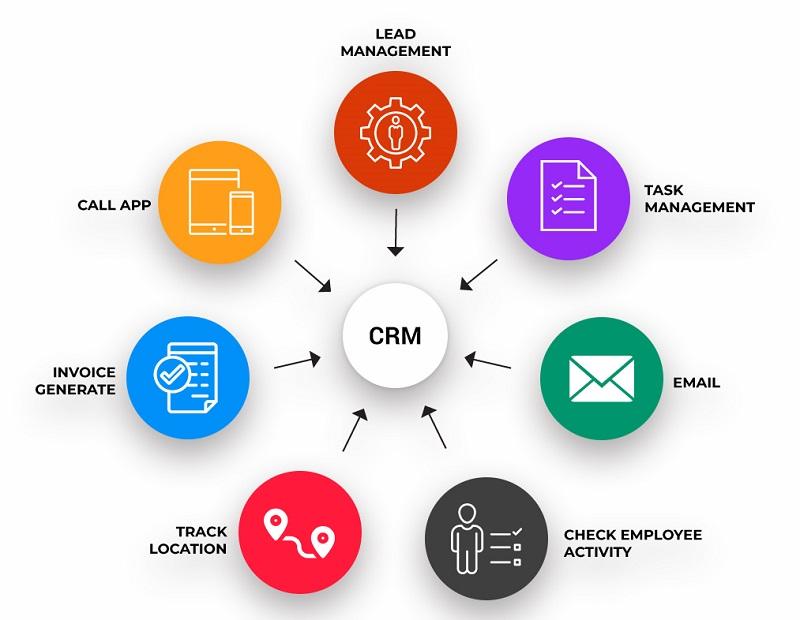
The modern business landscape is inextricably linked to the capabilities and evolution of the global CRM Software industry. At its core, Customer Relationship Management (CRM) software is a technology for managing all of a company's relationships and interactions with its customers and potential customers. The primary goal is simple yet transformative: to improve business relationships to grow the business. A CRM system helps companies stay connected to customers, streamline processes, and improve profitability. It has evolved dramatically from its origins as a simple digital contact management system or Rolodex into a sophisticated, multifaceted platform that serves as the central nervous system for all customer-facing operations. Today's advanced CRM platforms are no longer just tools for the sales department; they are integral, company-wide ecosystems that unify sales, customer service, marketing, e-commerce, and analytics onto a single platform. This provides a holistic, 360-degree view of every customer, breaking down the traditional data silos between departments. This unified view is the bedrock of modern customer-centric strategy, enabling businesses of all sizes—from small startups to global enterprises—to deliver consistent, personalized, and memorable experiences across the entire customer lifecycle, which is now a critical differentiator in a competitive marketplace.
The foundational architecture of the CRM industry is built upon three primary pillars of functionality: Sales Force Automation (SFA), Marketing Automation, and Customer Service and Support. Sales Force Automation is designed to streamline and enhance the efficiency of the sales process. This includes essential features like contact and lead management, which help organize and track interactions with prospects; opportunity and pipeline management, which provides a visual representation of deals as they move through the sales stages; and sales forecasting, which uses data to predict future revenue. Marketing Automation focuses on engaging customers at the top of the funnel, with tools for email marketing campaign management, lead nurturing through automated workflows, and granular customer segmentation for personalized messaging. The third pillar, Customer Service and Support, is centered on retaining customers and ensuring their satisfaction post-purchase. This involves case management and ticketing systems to track and resolve customer issues, omnichannel communication tools to engage customers on their preferred channel (phone, email, chat, social media), and self-service knowledge bases. When integrated, these three modules ensure a seamless handoff of customer information from marketing to sales and then to service, creating a cohesive journey rather than a series of disconnected interactions.
The competitive landscape of the CRM software industry is characterized by a fascinating duality: it is both highly consolidated at the top and incredibly fragmented with a long tail of niche innovators. A few dominant, large-scale players command a significant majority of the market share. Salesforce stands as the undisputed market leader, having pioneered the Software-as-a-Service (SaaS) model for CRM and built a formidable ecosystem around its platform, including its massive AppExchange marketplace. Following closely are other technology giants, including Microsoft with its Dynamics 365 platform, which leverages its deep integration with the broader Microsoft technology stack (Office 365, Azure, Power BI) as a key competitive advantage. Legacy enterprise software providers like Oracle and SAP also hold substantial market share, focusing on integrating their CRM offerings (like NetSuite CRM and SAP C4C, respectively) with their dominant ERP systems. Beyond these titans, there is a vibrant ecosystem of powerful challengers and specialized vendors. Companies like HubSpot have carved out a significant niche in the inbound marketing and SME space, while Zoho offers a remarkably broad and affordable suite of applications, and Freshworks focuses on user-friendly design for mid-market businesses. This dynamic environment ensures continuous innovation and provides businesses with a wide array of choices.
Looking toward the horizon, the future of the CRM software industry will be defined by intelligence, automation, and an even deeper focus on the customer experience. The relentless march of digital transformation is forcing every company, regardless of sector, to become a data-driven organization, and CRM systems are the primary repository for the most valuable data a company has: customer data. The next frontier is not just collecting this data but using it proactively and predictively. The integration of Artificial Intelligence (AI) and Machine Learning (ML) is moving from a premium feature to a standard expectation, powering everything from predictive lead scoring and churn analysis to generative AI that can draft emails or summarize service calls. Furthermore, increasing concerns around data privacy and regulations like GDPR and CCPA are shaping the industry, forcing vendors to build robust tools for consent management and data governance. The ultimate trajectory is a move away from a system of record to a system of intelligence and engagement. The future CRM will be a proactive partner to businesses, anticipating customer needs, personalizing interactions at an unprecedented scale, and ultimately enabling companies to build more meaningful, lasting, and profitable customer relationships.
Top Trending Reports:

 Arabic
 French
 Spanish
 Portuguese
 Deutsch
 Turkish
 Dutch
Dutch
 Italiano
 Russian
 Romaian
 Portuguese (Brazil)
 Greek
Greek