


The Evolution of Disposable Tableware: From Convenience to Sustainable Solutions
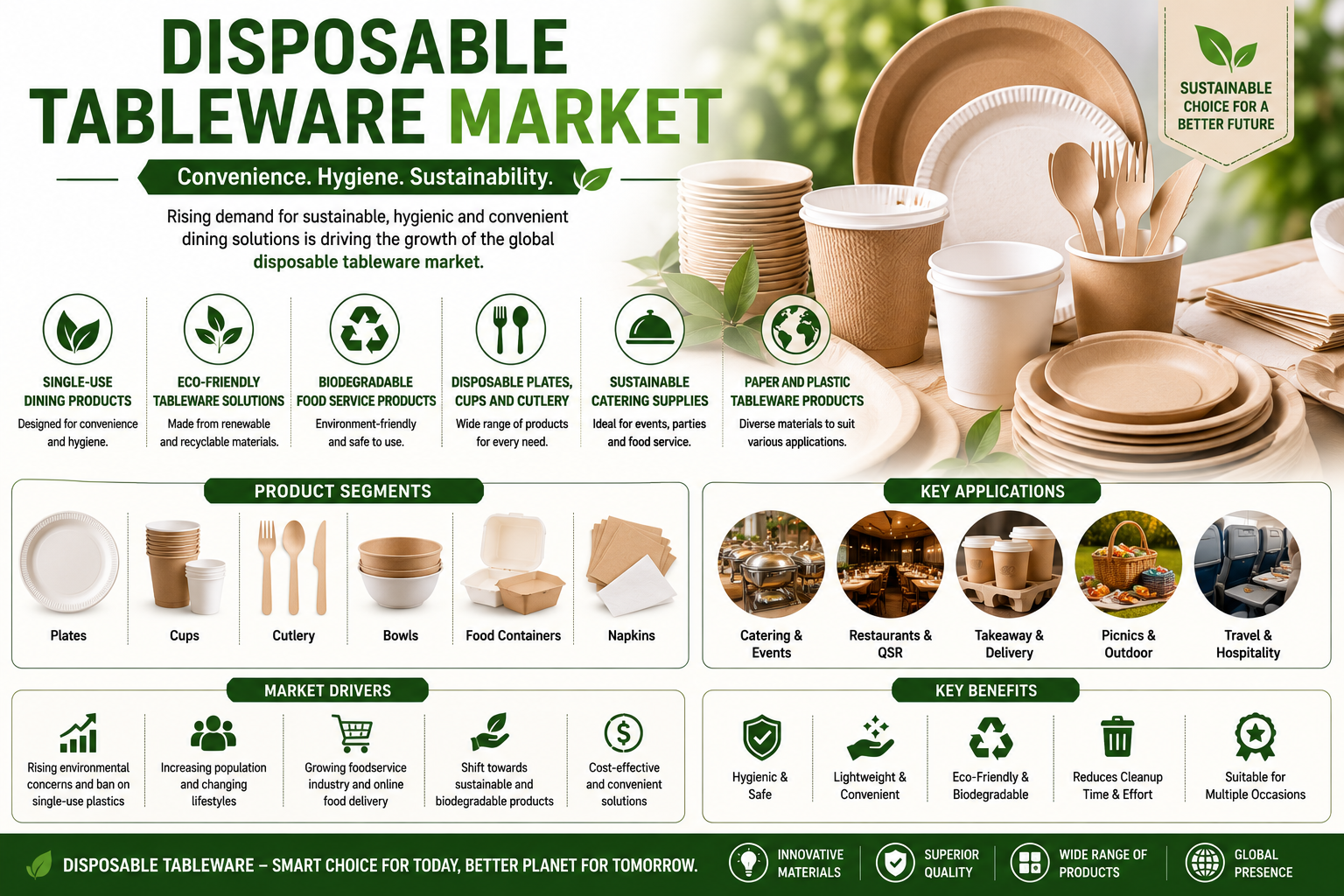
The journey of Disposable Tableware is a compelling story of innovation, reflecting a global shift from simple convenience to a deep commitment to sustainability. This evolution has transformed the industry, moving it from a focus on plastic and foam to the widespread adoption of Biodegradable Food Service Products and fibre-based alternatives. The disposable tableware market, valued at USD 33.62 billion in 2024 and projected to reach USD 50.67 billion by 2035, is at the heart of this transformation, driven by regulatory pressure, technological breakthroughs, and changing consumer values.
Early disposable tableware was primarily about convenience, dominated by plastic and foam. The introduction of Expanded Polystyrene (EPS) was a major milestone, offering a lightweight, insulating, and cheap solution. However, the environmental cost of these materials has become clear, leading to the current era of sustainable innovation, where the fastest-growing materials are paper and molded-fibre, and the only declining segment is EPS foam.
Key Milestones in Sustainable Innovation
The transition to sustainable tableware is marked by several key milestones. Regulatory action, such as California's SB 54 ban on EPS foam and the EU's Packaging and Packaging Waste Regulation (PPWR), has been a primary driver, eliminating entire categories of non-compliant materials and redirecting demand toward fibre-based alternatives. This regulatory pressure is intensifying, with bans and EPR schemes expanding globally.
A critical technological milestone has been the development of commercial-scale PFAS-free barrier coatings. This innovation has effectively closed the performance gap, allowing fibre-based products to contain hot liquids and greasy foods, applications that were previously the domain of plastic and foam. This has unlocked a vast new addressable market for sustainable materials, making them a viable choice across virtually the entire range of food service applications.
The Future of Disposable Tableware
Looking ahead, the future of the industry is defined by sustainability, technology, and a circular economy. Paper and molded-fibre are on track to become the dominant material, with plastic shifting towards recyclable mono-material formats like PP and bioplastics. The Bamboo and wood segments will continue to grow, driven by consumer demand for premium natural alternatives.
The Online distribution channel is set to become even more important, enabling procurement managers to filter by sustainability certifications. The Outdoor Events segment will continue its rapid growth as more gatherings prioritize eco-friendly practices. The evolution of disposable tableware is a testament to the industry's ability to innovate and adapt, ensuring that Biodegradable Food Service Products will lead the way to a more sustainable future.

 English
 Arabic
 Spanish
 Portuguese
 Deutsch
 Turkish
 Dutch
Dutch
 Italiano
 Russian
 Romaian
 Portuguese (Brazil)
 Greek
Greek