


Robotic Solar Panel Cleaning Systems: The Intelligent Technology Maximizing Solar Energy Efficiency
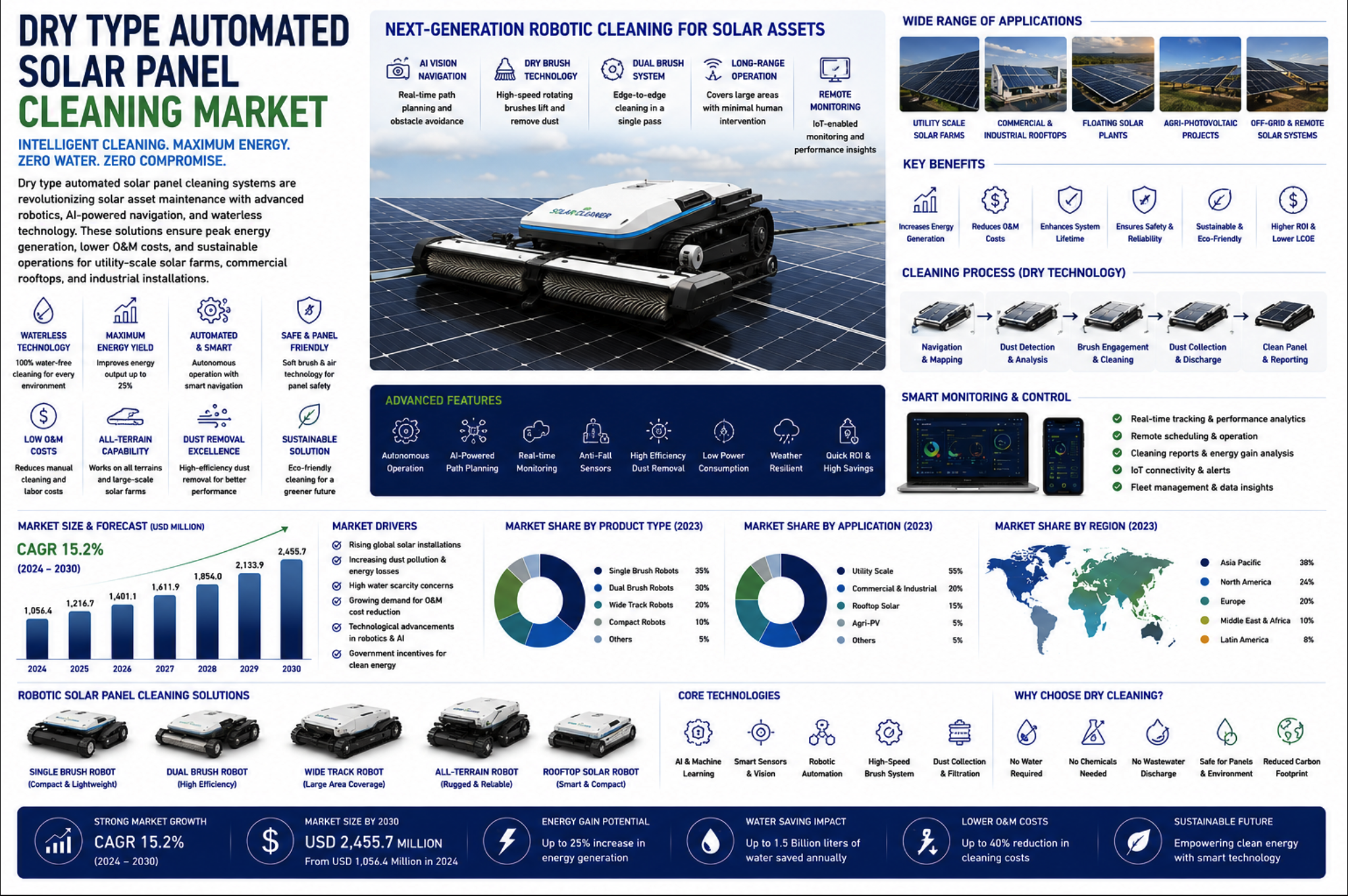
Exploring the critical role of robotic solar panel cleaning systems in maximizing solar energy efficiency, covering the technology, benefits, and market trends driving their widespread adoption.
Robotic Solar Panel Cleaning Systems are revolutionizing solar farm maintenance, providing the intelligent, autonomous, and waterless cleaning solutions that maximize energy output and minimize operational costs. These advanced systems leverage robotics, artificial intelligence, and sensor technology to navigate solar arrays, remove dust and debris, and ensure panels operate at peak efficiency. The global market for these systems is a core segment of the broader Dry Type Automated Solar Panel Cleaning Market, valued at $1.35 billion in 2024 and projected to reach $6.02 billion by 2035. The robotic cleaning systems segment currently holds the largest market share due to their high efficiency, precision, and ability to operate autonomously, significantly reducing labor costs and maintenance time. These systems leverage advanced technologies such as artificial intelligence and machine learning, ensuring optimal cleaning performance regardless of environmental conditions.
Robotic solar panel cleaning systems are vital for ensuring the long-term performance and profitability of solar energy projects. Clean panels are known to operate more efficiently, with studies suggesting that unclean panels can lose up to 25% of their efficiency. The growing demand for Robotic Solar Panel Cleaning Systems is a direct response to the increasing scale of solar installations and the need for reliable, cost-effective maintenance solutions. The utility scale end-user segment is projected to reach a significant valuation by 2035, surpassing the residential segment as large solar farms require automated solutions to maintain performance across extensive fields.
The adoption of robotic cleaning systems is being driven by several factors, including labor shortages in the maintenance sector, the need for operational efficiency, and the integration of smart technologies. As the demand for solar energy installations grows, the need for skilled labor to maintain these systems has become more pronounced. Automated cleaning solutions offer a viable alternative, reducing reliance on human labor while ensuring that solar panels remain clean and efficient. The integration of IoT and AI technologies enables real-time monitoring and predictive maintenance, further optimizing performance and reducing downtime. The development of AI-driven cleaning robots represents a significant opportunity for the market, with companies like Ecoppia expanding deployment of its AI-driven, waterless robotic cleaning systems across Asia and the Americas.
The market for robotic solar panel cleaning systems is characterized by intense competition and rapid innovation. Key players like Ecoppia, SolarCleano, and AquaClean are continuously developing new technologies to improve cleaning efficiency and reduce costs. In September 2025, AquaClean launched a new line of eco-friendly cleaning robots designed specifically for large-scale solar installations. In Q2 2025, Ecoppia expanded deployment of its AI-driven, waterless robotic cleaning systems using microfiber brushes and airflow for dry cleaning. The development of modular and adaptable robotic systems is also a key trend, enabling cleaning solutions to be tailored to specific installation types and environmental conditions. As the industry continues to evolve, the importance of waterless solar module maintenance will drive further advancement in robotic solar panel cleaning systems, ensuring that these intelligent technologies can meet the demanding requirements of the rapidly growing solar energy sector.

 Arabic
 French
 Spanish
 Portuguese
 Deutsch
 Turkish
 Dutch
Dutch
 Italiano
 Russian
 Romaian
 Portuguese (Brazil)
 Greek
Greek