


Can International Cooperation Prevent the Next Global Crisis?
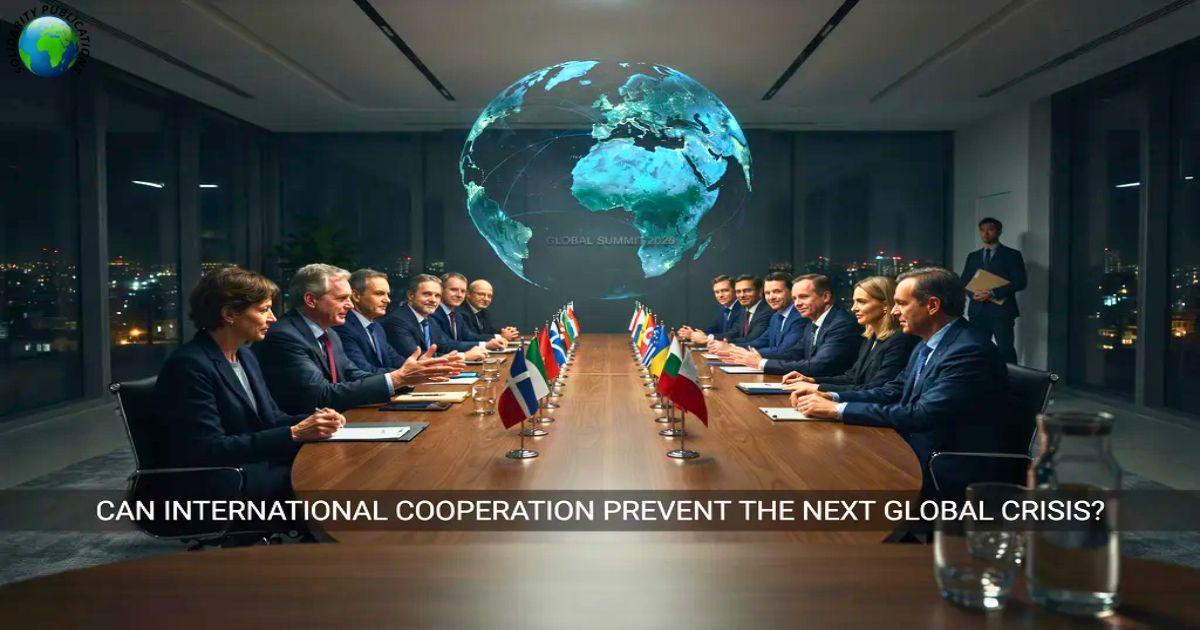
The world is entering a phase where risks no longer stay inside borders. Conflicts, climate shocks, cyber threats, and political rivalries now connect instantly across nations. In this environment, international cooperation becomes more than a political idea. It becomes a survival tool for modern civilization. The key question is simple. Can countries work together fast enough to stop the next global crisis before it spreads?
Today, global tensions are rising due to economic pressure, technology competition, and shifting alliances. At the same time, global crisis prevention depends on trust, communication, and shared responsibility. No single country can handle these challenges alone. That is why international peace and security now rely heavily on cooperation between governments, institutions, and global organizations working together in real time.
What Makes International Cooperation Essential Today?
International cooperation is essential because global problems are no longer isolated. A crisis in one region can quickly affect energy prices, trade routes, and even political stability worldwide. This interconnected system forces nations to rely on diplomacy and cooperation instead of isolation.
Another reason is complexity. Issues like cyber-attacks, pandemics, and financial shocks require shared intelligence. Without cooperation, global stability becomes fragile and unpredictable. Countries must exchange information, build trust, and strengthen coordination to reduce uncertainty and improve response speed during crises.
Why the World Faces More Shared Risks Than Ever
Modern risks are deeply connected. Wars, technology, and economic systems now interact in real time. A conflict in one region can trigger inflation, migration, and supply chain disruption across continents. This is why global conflict resolution is becoming harder than before.
Another major factor is digital exposure. Cyber systems, financial networks, and communication platforms are vulnerable to attacks. This increases the need for conflict prevention strategies that include both military and digital security planning. Without coordination, even small disruptions can escalate into global instability.
Lessons from Past Global Crises
History shows that cooperation has prevented larger disasters. During major Cold War tensions, diplomatic communication helped avoid direct nuclear conflict. Agreements supported international diplomacy and reduced escalation risks between superpowers.
The United Nations also played a central role in stabilizing post-war relations. Global agreements and peace missions showed that structured dialogue can reduce violence. These lessons prove that even deeply divided nations can find common ground when pressure for peace becomes stronger than pressure for conflict.
How AI and Cyber Warfare Are Changing Security
Technology has transformed conflict dynamics. Cyber-attacks, misinformation, and AI-driven systems are now part of modern security challenges. This shift makes international cooperation even more urgent because digital threats cross borders instantly.
New risks like AI-driven surveillance, hacking networks, and digital warfare require joint defense systems. Countries must coordinate to manage global security challenges and prevent escalation. Without cooperation, cyber incidents could trigger diplomatic crises or even physical conflict between nations.
What Befriending China Teaches About Cooperation
Global cooperation is not just theory. It is also practice. The idea of Befriending China highlights how engagement can reduce misunderstanding between major powers. Dialogue helps reduce tension and creates pathways for negotiation instead of confrontation.
US-China relations show how fragile global balance can be. At the same time, they demonstrate that communication channels are essential for maintaining stability. Cooperation does not remove competition, but it can prevent it from turning into conflict. This is a key lesson for future world peace.
Can Diplomacy Reduce Future Global Tensions?
Diplomacy remains the strongest tool for preventing escalation. It allows countries to solve disputes without military action. Through structured negotiation, leaders can manage crises before they become uncontrollable.
In many cases, international peace and security depend on early diplomatic engagement. When dialogue starts early, misunderstandings can be corrected before they turn into conflict. This is why diplomacy is still the foundation of global crisis prevention in the modern world.
The Role of Global Institutions in Building Stability
Global institutions play a major role in maintaining balance. They create platforms where countries can discuss issues openly and peacefully. This reduces the risk of miscommunication and sudden escalation.
Organizations like the United Nations help coordinate humanitarian support, peacekeeping missions, and diplomatic talks. These efforts strengthen global stability and support peacebuilding efforts in conflict zones. However, success depends on how actively nations choose to participate.
|
Global Tool |
Purpose |
Impact |
|
Diplomacy |
Negotiation between nations |
Reduces war risk |
|
Peacekeeping |
Field missions |
Stabilizes conflict zones |
|
Agreements |
Legal cooperation |
Prevents escalation |
A Realistic Path to Peace in an Uncertain World
A stable future requires practical thinking, not idealism alone. This is where A Realistic Path to Peace becomes important. It focuses on achievable steps like cooperation, communication, and shared security frameworks.
Peace is not automatic. It must be built through continuous effort. Nations need to invest in trust, transparency, and international cooperation to reduce risks. Without these efforts, global systems remain vulnerable to sudden shocks and escalating conflicts.
Conclusion
The next global crisis will not come from one cause. It will come from many interconnected pressures like politics, technology, and economics. That is why international cooperation is no longer optional. It is necessary for survival.
If nations strengthen dialogue, improve coordination, and prioritize global crisis prevention, then future conflicts can be reduced. The path forward depends on whether the world chooses division or collaboration. In the end, cooperation is still the strongest defense for future world peace.

 English
 Arabic
 French
 Spanish
 Portuguese
 Deutsch
 Turkish
 Dutch
Dutch
 Italiano
 Russian
 Portuguese (Brazil)
 Greek
Greek