


How to Choose the Best Lithium Battery Shipping Training Provider
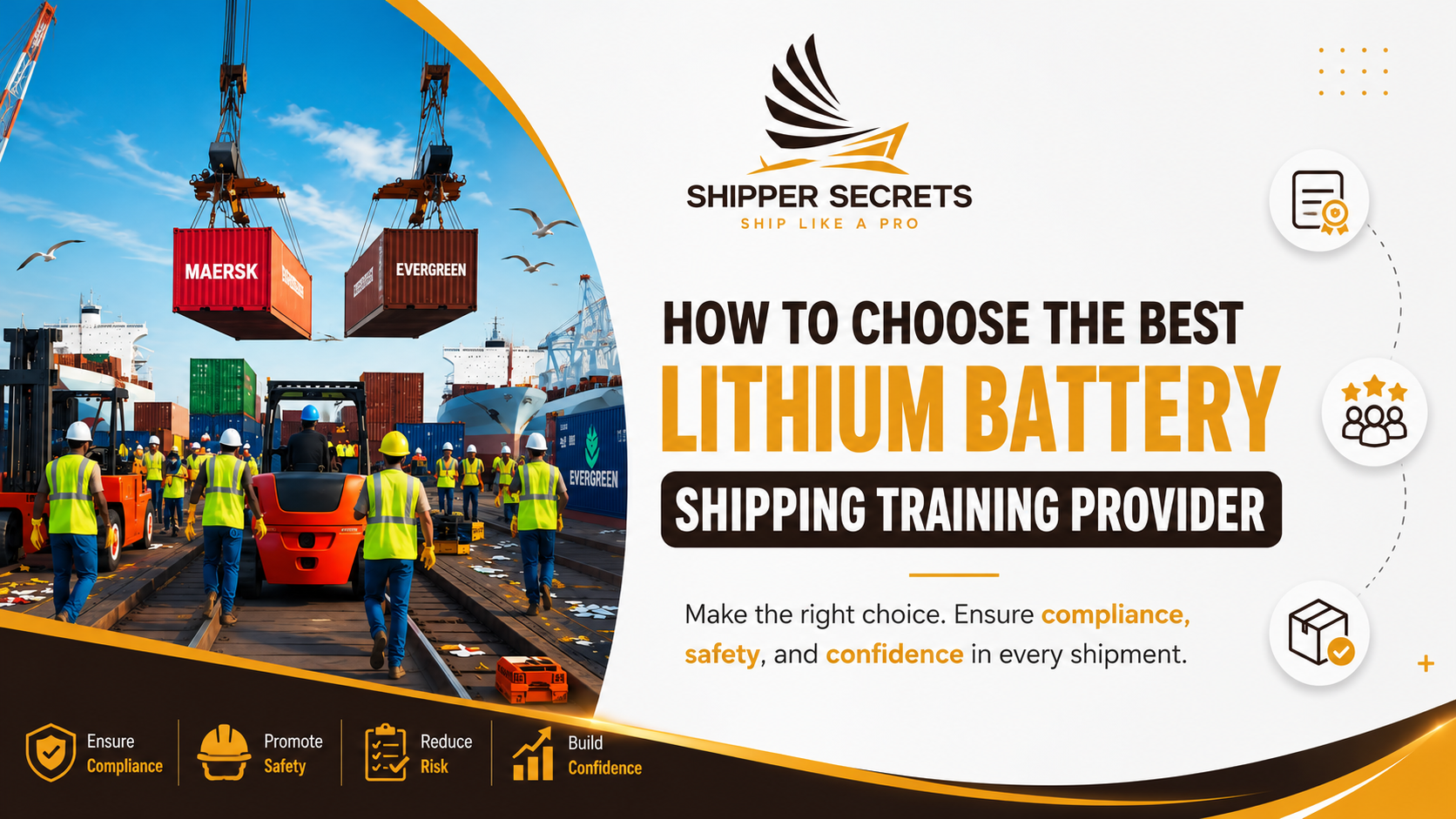
Shipping lithium batteries safely is one of the most important responsibilities for businesses involved in manufacturing, packaging, logistics, warehousing, e-commerce, and freight forwarding. Since lithium batteries are classified as dangerous goods, companies must ensure that employees receive proper training to comply with international shipping regulations and avoid costly penalties.
However, with so many training providers available, choosing the right one can be challenging. The best lithium battery shipping training provider should offer accurate, up-to-date, and industry-recognized courses that prepare employees to handle shipments safely and confidently.
This guide explains the key factors to consider before selecting a lithium battery shipping training provider.
👉https://shippersecrets.com/courses/lithium-battery-shipping/
Why Choosing the Right Training Provider Matters
Incorrect lithium battery shipping can lead to:
-
Shipment delays
-
Regulatory violations
-
Heavy fines
-
Product damage
-
Fire hazards
-
Rejected shipments
-
Customer dissatisfaction
A reliable training provider ensures your employees understand current regulations and follow the correct procedures every time they prepare or ship lithium batteries.
1. Verify Industry Recognition
The first thing to check is whether the training provider offers courses based on internationally recognized regulations.
Look for providers that cover:
-
IATA Dangerous Goods Regulations (Air Transport)
-
IMDG Code (Ocean Transport)
-
DOT/49 CFR Regulations (Ground Transport)
-
ICAO Technical Instructions
-
ADR (European Road Transport), if applicable
A recognized provider will align its curriculum with the latest regulatory updates.
2. Ensure the Course Covers All Transport Modes
Many businesses ship products using more than one transportation method.
Choose a provider offering training for:
-
Air shipping
-
Road transportation
-
Rail transportation
-
Multi-modal shipping
This helps employees understand the different requirements for each shipping method.
3. Check if the Training Is Updated Regularly
Lithium battery shipping regulations change frequently.
A good provider should:
-
Update course materials annually
-
Reflect new IATA and IMDG editions
-
Include recent regulatory changes
-
Explain new packaging instructions
-
Cover updated marking and labeling requirements
Outdated training can lead to compliance violations.
4. Look for Experienced Industry Instructors
The best instructors have practical experience in:
-
Dangerous goods shipping
-
Freight forwarding
-
Supply chain management
-
Regulatory compliance
-
Hazardous materials transportation
Experienced trainers provide real-world examples that make learning easier.
5. Review the Course Curriculum
A comprehensive training course should include:
-
Lithium battery basics
-
Battery classifications
-
UN numbers
-
Packaging requirements
-
State of Charge (SOC) limits
-
Shipping documentation
-
Dangerous goods declarations
-
Marks and labels
-
Packing Instructions
-
Emergency response
-
Common shipping mistakes
-
Regulatory updates
The more practical the curriculum, the better prepared your team will be.
6. Verify Certification
Always confirm whether participants receive a certificate after successfully completing the course.
A quality certificate should include:
-
Student name
-
Course title
-
Completion date
-
Validity period (if applicable)
-
Instructor or organization details
Many employers require certification to demonstrate regulatory compliance.
7. Consider Online vs. In-Person Training
Different businesses have different training needs.
Online Training
Benefits include:
-
Learn from anywhere
-
Flexible schedules
-
Lower costs
-
Self-paced learning
-
Easy access for remote teams
Classroom Training
Benefits include:
-
Live instructor interaction
-
Hands-on demonstrations
-
Immediate Q&A
-
Group discussions
-
Practical exercises
Many providers now offer virtual live instructor-led training that combines flexibility with real-time support.
8. Check for Practical Learning
The best courses include practical scenarios such as:
-
Identifying battery types
-
Selecting proper packaging
-
Applying hazard labels
-
Completing shipping documentation
-
Preparing compliant shipments
-
Handling damaged batteries
Practical learning improves retention and reduces workplace mistakes.
9. Read Customer Reviews and Testimonials
Before enrolling, check:
-
Google Reviews
-
Trustpilot ratings
-
LinkedIn recommendations
-
Customer testimonials
-
Case studies
Positive feedback from logistics professionals and businesses indicates reliable training quality.
10. Evaluate Training Support
A quality provider should offer ongoing support after course completion.
Look for:
-
Instructor access
-
Email support
-
Updated reference materials
-
Downloadable guides
-
Regulatory update notifications
-
Refresher training options
Continuous support helps employees stay compliant as regulations evolve.
11. Compare Pricing Carefully
The cheapest course isn't always the best value.
Compare providers based on:
-
Course content
-
Instructor expertise
-
Certification
-
Training materials
-
Customer support
-
Regulatory updates
-
Practical exercises
Investing in quality training can help prevent expensive compliance errors later.
12. Look for Customized Corporate Training
If your organization ships lithium batteries regularly, corporate training can provide additional value.
Customized programs may include:
-
Company-specific shipping procedures
-
Industry-focused examples
-
Team training sessions
-
Internal compliance guidance
-
Group certifications
Tailored training helps employees apply regulations directly to their daily responsibilities.
Questions to Ask Before Choosing a Provider
Before enrolling, ask these questions:
-
Is the course based on the latest regulations?
-
Are instructors experienced in dangerous goods shipping?
-
Is certification provided?
-
Does the course include practical examples?
-
Are updates included?
-
Is post-training support available?
-
Can the training be customized for our business?
-
Are refresher courses available?
Common Mistakes When Choosing a Training Provider
Avoid providers that:
-
Use outdated course materials
-
Offer no certification
-
Focus only on theory
-
Ignore regulatory updates
-
Lack experienced instructors
-
Provide no customer support
-
Offer overly simplified training without practical exercises
Choosing the wrong provider may leave employees unprepared for real-world shipping challenges.
Benefits of Choosing the Right Training Provider
A reputable lithium battery shipping training provider helps your organization:
-
Maintain regulatory compliance
-
Improve shipping accuracy
-
Reduce costly mistakes
-
Increase workplace safety
-
Protect employees and customers
-
Prevent shipment delays
-
Build customer confidence
-
Support long-term business growth
Final Thoughts
Selecting the best lithium battery shipping training provider is an investment in safety, compliance, and operational efficiency. Look beyond price and evaluate the provider's industry experience, course quality, certification, regulatory updates, and practical learning opportunities.
Well-trained employees are better equipped to prepare compliant shipments, reduce shipping errors, and protect your business from regulatory risks. By choosing a trusted training provider, your organization can confidently navigate the complex requirements of lithium battery transportation while maintaining the highest standards of safety and compliance.
👉https://shippersecrets.com/who-needs-li-ion-shipping-training/
FAQs
1. Why is lithium battery shipping training important?
It helps employees comply with dangerous goods regulations, reduce shipping errors, improve safety, and avoid fines or shipment delays.
2. What should a good lithium battery shipping training course include?
A comprehensive course should cover battery classifications, packaging, labeling, documentation, transport regulations, emergency procedures, and practical shipping scenarios.
3. How often should lithium battery shipping training be updated?
Training should be refreshed whenever major regulatory changes occur, with many organizations recommending updates every two years or according to applicable regulations.
4. Is online lithium battery shipping training effective?
Yes. High-quality online training provides flexible learning, up-to-date content, certification, and practical examples, making it suitable for many businesses.
5. How do I know if a training provider is reliable?
Look for industry-recognized courses, experienced instructors, updated materials, certification, positive customer reviews, and ongoing support after course completion.
📞 Contact Us
📍 868 Cardiff Road, Naperville, IL 60565
📞 708.275.8418
🌐 Get in touch with our logistics experts for reliable shipping and freight solutions. 🚚✈️📦

 English
 French
 Spanish
 Portuguese
 Deutsch
 Turkish
 Dutch
Dutch
 Italiano
 Russian
 Romaian
 Portuguese (Brazil)
 Greek
Greek