


How AI Companions Will Transform Digital Relationships by 2035
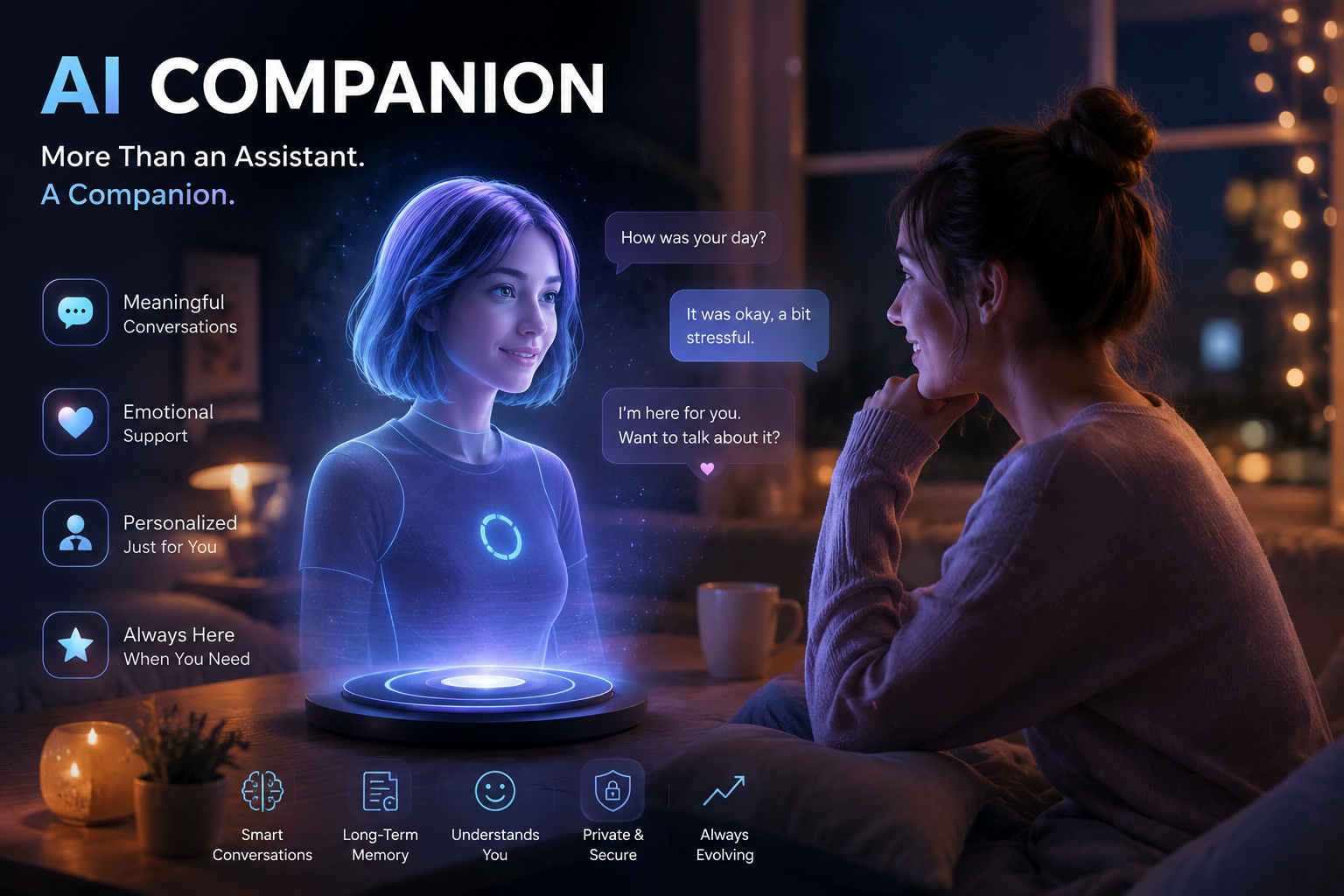
Digital relationships have changed significantly over the last decade. Messaging apps, social media, video calls, and virtual communities have reshaped the way people communicate across countries and cultures. Artificial intelligence is now adding another layer to this transformation. Instead of simply responding to commands or answering questions, modern AI companions are becoming capable of maintaining conversations, remembering preferences, adapting to personalities, and providing personalized interactions that feel increasingly natural.
Digital Relationships Are Becoming More Intelligent
The first generation of chatbots focused on answering simple questions using predefined scripts. Modern AI companions operate very differently. They analyze context, remember previous conversations, recognize communication patterns, and generate responses that feel more natural.
This shift means conversations are becoming continuous rather than isolated interactions. Instead of starting every conversation from scratch, future AI systems will maintain long-term memories, making communication feel more consistent over months or even years.
People already spend several hours every day communicating digitally through smartphones, wearable devices, and connected computers. As AI becomes integrated into these devices, intelligent companions may become as common as search engines are today.
Similarly, personalized AI systems will adapt their communication styles based on user preferences instead of delivering identical responses to everyone.
Why AI Companions Are Becoming More Personal
One of the biggest technological improvements involves personalization.
Future AI companions will analyze conversation history, communication preferences, favorite hobbies, learning interests, entertainment choices, and scheduling habits. This information allows AI to create interactions that feel increasingly relevant.
Instead of generic conversations, future systems may:
-
Remember important dates
-
Continue unfinished discussions
-
Recommend books based on previous interests
-
Suggest activities according to mood
-
Maintain consistent personalities over time
Consequently, conversations become more meaningful because the AI builds continuity instead of simply responding to isolated prompts.
Xchar AI already reflects the growing demand for customized conversational experiences, demonstrating how personalization has become one of the defining characteristics of modern AI companionship.
Emotional Intelligence Will Improve Dramatically
Today's AI models recognize emotional context through language patterns. Over the next decade, emotional intelligence will become considerably more sophisticated.
Future systems may combine several inputs simultaneously:
-
Voice tone
-
Facial expressions
-
Typing speed
-
Word selection
-
Conversation history
-
Behavioral patterns
This combination helps AI estimate emotional states more accurately.
For example, if someone appears stressed after work, an AI companion might recommend relaxation exercises, suggest music, continue a lighthearted conversation, or simply adjust its communication style.
Although AI cannot truly experience emotions, improved emotional modeling allows conversations to become more supportive and context-aware.
Virtual Reality Will Make Conversations Feel More Natural
The combination of artificial intelligence and immersive technologies will dramatically change digital interactions.
Virtual reality and augmented reality devices continue improving each year. By 2035, AI companions may exist as interactive three-dimensional avatars capable of sharing virtual spaces with users.
Imagine attending a virtual cooking class with an AI assistant standing beside the kitchen counter, helping prepare recipes in real time.
Likewise, language learning could become far more engaging when conversational AI appears as a realistic tutor inside immersive environments instead of existing solely as text on a screen.
These improvements could make digital communication significantly more engaging than today's messaging applications.
AI Companions May Become Everyday Digital Partners
Rather than serving only entertainment purposes, AI companions are expected to assist with everyday routines.
Potential responsibilities may include:
-
Daily planning
-
Appointment reminders
-
Travel assistance
-
Health habit tracking
-
Productivity coaching
-
Creative brainstorming
-
Language practice
-
Financial organization
Not only will these assistants answer questions, but they may also anticipate future needs using predictive intelligence.
As a result, AI companions become proactive rather than reactive.
Personalized Relationships Will Continue Becoming More Interactive
Many users already seek highly personalized conversations that match individual personalities and communication styles. This demand has encouraged developers to create increasingly adaptive conversational experiences.
Some users enjoy casual conversations, while others prefer storytelling, role-playing, creative writing, or emotional support discussions. This diversity has contributed to growing interest in experiences centered around an AI girlfriend, where personalization plays a much larger role than traditional chatbot interactions.
However, future systems are expected to extend far beyond companionship alone, supporting education, wellness, productivity, business communication, and creative collaboration within the same intelligent ecosystem.
Businesses Will Build Entire Services Around AI Companions
AI companions will not remain limited to consumer applications.
Businesses across multiple industries are expected to integrate conversational intelligence into customer experiences.
Examples include:
-
Healthcare providers offering continuous patient support
-
Educational institutions providing personalized tutoring
-
Travel companies delivering intelligent trip planning
-
Financial organizations simplifying customer guidance
-
Retail businesses creating personalized shopping assistants
-
Gaming companies building adaptive non-player characters
Consequently, conversational AI becomes an important competitive advantage instead of an optional feature.
Companies investing early in personalized AI technologies are likely to shape customer expectations throughout the coming decade.
Better Memory Will Create Long-Term Conversations
One limitation of early AI systems involved poor memory between conversations.
Future models are expected to maintain structured long-term memory while respecting privacy controls.
This improvement allows conversations to continue naturally over months rather than restarting every session.
For instance, an AI companion may remember:
-
Favorite books
-
Career goals
-
Learning progress
-
Family events
-
Personal achievements
-
Communication preferences
Clearly, this continuity creates stronger digital relationships because conversations develop over time instead of existing independently.
Privacy Will Become a Major Competitive Advantage
Personalization depends upon responsible data management.
Users increasingly expect transparency regarding:
-
Data collection
-
Storage policies
-
Memory controls
-
Conversation deletion
-
Encryption standards
-
Permission settings
Companies capable of balancing personalization with privacy protection will likely earn greater user trust.
Despite significant technological improvements, maintaining secure user data will remain essential for long-term adoption.
Platforms including Xchar AI and other conversational AI providers will likely continue investing in stronger privacy frameworks as intelligent companionship becomes increasingly mainstream.
AI Will Support Creativity Instead of Replacing It
Many people associate AI primarily with automation.
However, conversational intelligence also supports creativity.
Future AI companions may assist with:
-
Story development
-
Script writing
-
Music brainstorming
-
Marketing ideas
-
Business planning
-
Language translation
-
Educational content
-
Presentation preparation
Instead of replacing creative thinking, AI becomes a collaborative partner that accelerates idea generation.
In the same way calculators changed mathematics education without replacing mathematicians, conversational AI may increase creative productivity without replacing human imagination.
Digital Companionship Will Expand Across Every Age Group
Earlier technology adoption often centered around younger audiences.
Future AI companions will likely appeal to all generations.
Children may use educational AI tutors.
University students could receive personalized academic coaching.
Professionals might organize work schedules with intelligent assistants.
Older adults may benefit from conversational support, medication reminders, and simplified digital communication.
Consequently, AI companionship becomes less about age and more about individual needs.
Communication Will Become More Natural Across Languages
Language barriers continue limiting international communication.
Future AI companions are expected to translate conversations almost instantly while preserving emotional tone and conversational context.
Instead of translating isolated sentences, AI may understand ongoing discussions, regional expressions, humor, and cultural references.
This capability supports global collaboration across education, healthcare, business, and entertainment.
Eventually, multilingual conversations could become nearly effortless regardless of participants' native languages.
AI Conversations Will Feel Increasingly Human
Advances in speech synthesis, facial animation, emotional modeling, and contextual memory will significantly improve conversational realism.
Future systems may:
-
Pause naturally
-
Express appropriate emotions
-
Recognize sarcasm
-
Continue previous discussions
-
Adjust speaking speed
-
Adapt vocabulary according to user preferences
Meanwhile, improvements in multimodal AI allow conversations to combine voice, images, gestures, video, and text simultaneously.
These capabilities create interactions that feel far more dynamic than today's text-based assistants.
Looking Ahead to 2035
The next decade will likely redefine what digital relationships mean. Conversations with intelligent systems will become more personalized, contextual, emotionally responsive, and integrated into everyday routines. Artificial intelligence will assist with learning, creativity, productivity, communication, entertainment, and personal organization through interactions that feel increasingly natural.
At the same time, responsible development will remain essential. Privacy protection, transparency, ethical AI practices, and user control will determine which companies earn long-term trust. Developers that prioritize secure personalization alongside technological innovation will be better positioned for sustainable growth.
Interest in conversational experiences continues expanding, including services centered around AI love chat, reflecting how users increasingly seek engaging and personalized communication rather than simple automated responses. As technology continues advancing, platforms including Xchar AI are expected to contribute to this broader evolution, helping shape a future where AI companions become trusted digital partners that complement human relationships instead of replacing them.
Conclusion
AI companions are moving far beyond basic chatbots. Advances in conversational intelligence, emotional awareness, multimodal communication, virtual reality integration, and long-term memory are setting the foundation for a new generation of digital relationships. By 2035, these systems are expected to become valuable companions for education, productivity, creativity, customer service, entertainment, and everyday communication.

 English
 Arabic
 Spanish
 Portuguese
 Deutsch
 Turkish
 Dutch
Dutch
 Italiano
 Russian
 Romaian
 Portuguese (Brazil)
 Greek
Greek