


How Pacific Galvanizing Reduces Lifecycle Costs for Northern California Galvanizing Clients
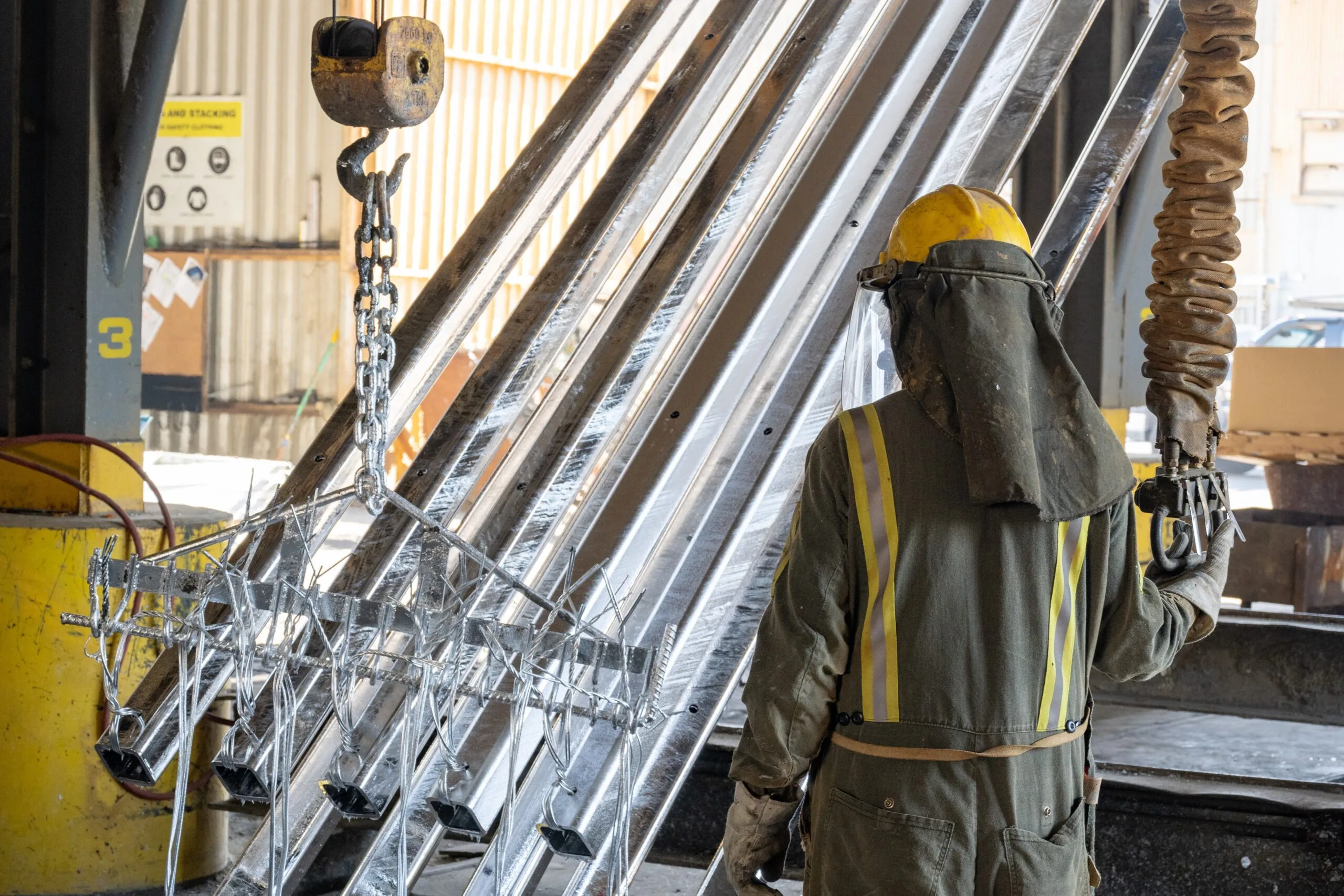
The discussion of corrosion protection costs almost always focuses on initial application cost — the per-ton or per-square-foot cost of applying a coating when a structure is first built. This framing is understandable because initial cost is the most immediately visible expense, but it misses the majority of the economic picture. The real economic argument for or against any corrosion protection system should be made on the basis of total lifecycle cost: initial application, maintenance interventions over the structure's life, and end-of-life considerations. When this full lifecycle picture is considered, hot dip galvanizing consistently demonstrates compelling economic advantages for many structural steel applications — and Pacific Galvanizing's quality and service model amplifies those advantages for its Northern California clients.
The Maintenance Cost Elimination Advantage
The most dramatic lifecycle cost advantage of hot dip galvanizing over paint systems is the elimination of maintenance recoating cycles. A painted structure in a Bay Area corrosive environment may require full recoating every 15 to 20 years. Each recoating cycle involves surface preparation (typically abrasive blasting to remove degraded paint and surface oxides), paint application, curing, and inspection — a labor-intensive and expensive process. In the Bay Area, where labor costs are among the highest in the country, these recoating costs are particularly significant. A galvanized structure that goes 50-plus years without recoating eliminates these recurring costs entirely, and in many lifecycle analyses this maintenance cost elimination is sufficient by itself to make galvanizing more economical over the full structure lifetime.
Reduced Inspection Burden Over the Structure's Life
Painted structures require regular inspection to assess coating condition and identify areas of active corrosion before they cause structural damage. This inspection work has direct cost in inspector time and equipment, and it has indirect cost in access requirements — scaffolding, traffic control, or other access provisions that are necessary to inspect structures at height or over traffic. Galvanized structures require far less frequent detailed coating inspection, because the galvanized coating deteriorates gradually and predictably without the sudden failures that paint systems can experience. For facility managers and public agency maintenance departments, the reduced inspection burden on galvanized assets is a meaningful workload reduction that frees resources for other priorities.
The Downtime and Disruption Avoidance Value
For infrastructure and industrial assets, the cost of maintenance work includes not just the direct cost of the work itself but the cost of disrupting normal operations to allow the maintenance to occur. A highway bridge that requires repainting must have lanes closed, sometimes for extended periods. An industrial structure that needs recoating may require a production shutdown or complex scaffolding that restricts normal operations. Hot Dip Galvanizing applied at the time of initial construction allows structures to operate without these disruptions for decades. For assets where operational disruption is expensive — and in the Bay Area, that includes most transportation, utility, and industrial assets — the avoided disruption value of galvanizing's long service life is a major economic benefit.
How Quality Galvanizing Extends the No-Maintenance Period
The no-maintenance service life of galvanized steel is directly related to the quality and thickness of the zinc coating applied. A coating that consistently meets or exceeds ASTM minimum thickness requirements will provide longer service than one that just barely meets the minimum, because the zinc consumption rate is determined by the environment and the thicker coating simply takes longer to consume. Pacific Galvanizing's process control, aimed at consistently meeting and typically exceeding ASTM minimums, directly translates to longer no-maintenance service periods for its clients' structures. Over a 50-year structure life, a few additional years of the no-maintenance period can translate to thousands or even tens of thousands of dollars in avoided maintenance cost.
Lifecycle Cost Analysis: Making the Case for Galvanizing
For clients who need to justify galvanizing's higher initial cost to financial decision-makers, Pacific Galvanizing can assist with lifecycle cost analysis documentation. The analysis framework compares the initial cost of galvanizing plus its long-term maintenance cost profile against the initial cost of paint or other coating systems plus their maintenance recoating costs, discounted to present value over the structure's expected life. In most analyses for Bay Area structural steel applications, galvanizing demonstrates a clear lifecycle cost advantage that justifies its higher initial cost. Having this analysis in hand makes specification conversations with owners and project financial managers much more productive.
Pacific Galvanizing's Role in Client Cost Management
Pacific Galvanizing actively supports clients in managing their galvanizing costs without compromising quality. Accurate upfront quotes allow budget certainty. Process optimization suggestions — such as design modifications that reduce handling complexity — can reduce per-unit processing costs. Volume scheduling strategies that combine multiple project batches can achieve better production efficiency. And long-term supplier relationship agreements can provide pricing stability and scheduling priority that benefit clients across multiple projects. These cost management tools, combined with the inherent lifecycle economics of quality galvanizing, make Pacific Galvanizing a genuine partner in helping Northern California clients build the most cost-effective corrosion protection programs possible.

 English
 Arabic
 French
 Spanish
 Portuguese
 Deutsch
 Turkish
 Dutch
Dutch
 Italiano
 Russian
 Romaian
 Portuguese (Brazil)