


GPU Cloud Servers: Making High-Performance Computing More Accessible
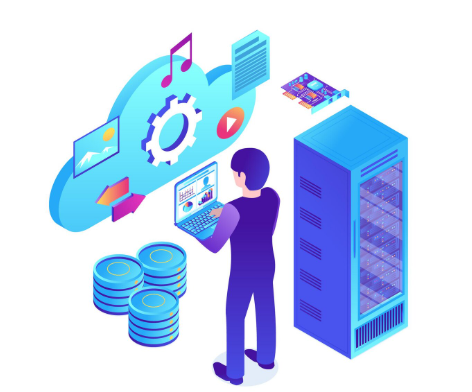
Modern computing tasks often require far more processing power than traditional CPUs can provide. A gpu cloud server offers access to graphics processing units through cloud infrastructure, making advanced computing available without purchasing expensive hardware. This approach has become increasingly valuable for developers, researchers, data scientists, and creative professionals who need high-performance resources for demanding workloads while maintaining flexibility in how they use computing power.
Unlike CPUs, which are designed to handle a wide range of sequential tasks, GPUs are built to process many calculations simultaneously. This parallel processing capability makes them well suited for applications such as artificial intelligence, machine learning, deep learning, scientific simulations, video rendering, and large-scale data analysis. By moving these workloads to cloud-based GPU infrastructure, users can scale resources according to project requirements rather than maintaining costly physical systems.
One of the major advantages of cloud-based GPU computing is accessibility. Organizations of all sizes can access enterprise-grade hardware without investing in data center space, cooling systems, or hardware maintenance. Resources can often be allocated for short-term projects, seasonal demand, or experimental workloads, helping teams use computing power only when required.
GPU-powered cloud environments also support collaboration. Multiple team members can work on shared datasets, development environments, and AI models regardless of their physical location. This is especially useful for distributed engineering teams, academic research groups, and creative studios that rely on collaborative workflows.
Performance consistency is another important consideration. Cloud providers regularly update their infrastructure with newer GPU architectures, allowing users to benefit from improvements in speed, memory capacity, and energy efficiency without replacing local hardware. This keeps projects compatible with evolving software frameworks and computational requirements.
Security and reliability also play an important role. Many cloud platforms include data backup options, network protection, access controls, and monitoring tools that help safeguard workloads while maintaining operational stability. Combined with flexible resource allocation, these features make cloud GPU computing suitable for both development and production environments.
As artificial intelligence, data-intensive applications, and visual computing continue to expand across industries, demand for scalable computing resources is expected to grow steadily. Selecting the right gpu cloud server depends on workload size, performance expectations, software compatibility, and budget. Understanding these factors helps individuals and organizations make informed decisions while taking advantage of modern computing capabilities without relying entirely on local hardware.

 English
 Arabic
 French
 Spanish
 Portuguese
 Deutsch
 Turkish
 Italiano
 Russian
 Romaian
 Portuguese (Brazil)
 Greek
Greek