


A Matter of Record: A Strategic and In-Depth Body-Worn Camera Market Analysis
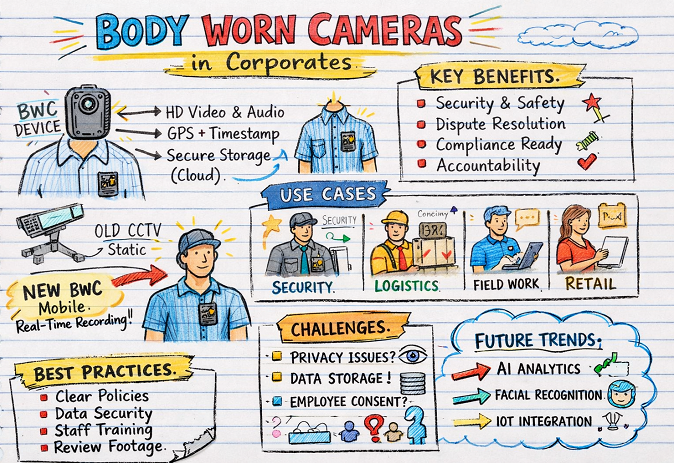
A comprehensive and strategic Body-Worn Camera Market Analysis reveals a market driven by a unique and powerful combination of social pressure, political will, and technological innovation. The industry sits at the sensitive intersection of public safety, civil liberties, and big data, creating a complex landscape for vendors, law enforcement agencies, and policymakers to navigate. Unlike many technology markets driven purely by ROI, the primary driver here is the less tangible, but critically important, goal of enhancing trust and accountability. A structured analysis, using a framework like SWOT, is essential for dissecting the market's fundamental strengths and weaknesses, as well as the significant external opportunities and threats that will shape its future. This balanced perspective is crucial for understanding the true value proposition of the technology, the significant challenges to its implementation, and the long-term trends that will define its evolution and impact on society. The stakes in this market go far beyond simple profit and loss.
The market's greatest Strength is its ability to address a pressing and highly visible societal need for police accountability and transparency. The video evidence it provides can be invaluable for resolving complaints and providing an objective record of events. For law enforcement, a key strength is the technology's potential to de-escalate situations and protect officers from false accusations. However, the market's most significant Weakness is the immense cost and complexity associated with storing and managing the massive volumes of video data generated. The recurring cost of cloud storage can be a major, long-term financial burden for public agencies. The process of redacting videos for public release is also incredibly time-consuming and labor-intensive. The greatest Opportunity for the market lies in the application of artificial intelligence and analytics to extract valuable insights from the video data, such as for officer training or identifying trends in use-of-force incidents. The expansion into new vertical markets beyond law enforcement, such as private security and healthcare, also represents a major growth opportunity. The primary Threats are centered around privacy and civil liberties concerns. The potential for these cameras to be used for mass surveillance or with controversial technologies like real-time facial recognition raises significant public and legal opposition. The risk of a major data breach of a cloud evidence platform would also be a catastrophic threat to the industry's credibility.
A key aspect of a market analysis is understanding the complex business model and the "stickiness" of the ecosystem. The dominant vendors in the space have moved away from a simple, one-time hardware sale model. Instead, they operate on a long-term, subscription-based model. A law enforcement agency typically signs a multi-year contract that includes not just the camera hardware but also a subscription to the cloud-based Digital Evidence Management System (DEMS), as well as warranties, support, and regular hardware upgrades. This creates a very "sticky" customer relationship. Once an agency has uploaded years' worth of sensitive case data into a specific vendor's cloud platform, the technical complexity and cost of migrating that data to a competitor's system are immense. This creates a powerful vendor lock-in effect and a highly defensible, recurring revenue stream for the market leaders. The true value and profitability of the business are not in the camera itself, but in the long-term software and services contract attached to it.
The regulatory and policy environment is another critical component of the market analysis, as it directly shapes how the technology can be deployed and used. There is no single national standard for body-worn camera usage in the United States; instead, there is a complex patchwork of state laws and individual department policies. These policies govern crucial issues such as when an officer must activate the camera, how long video footage must be retained, and the specific rules for when video can be released to the public. These policies have a direct impact on the market, particularly on the data storage requirements. A policy that requires retaining all non-evidentiary video for a year will result in much higher storage costs than one that allows it to be deleted after 90 days. Furthermore, laws governing public records and privacy directly impact the redaction workload. Vendors in this market must not only sell technology but must also be deeply knowledgeable about this complex legal landscape to help their clients implement compliant and effective programs.
Explore More Like This in Our Trending Reports:

 English
 French
 Spanish
 Portuguese
 Deutsch
 Turkish
 Dutch
Dutch
 Italiano
 Russian
 Romaian
 Portuguese (Brazil)
 Greek
Greek