The logistics industry depends on speed, visibility, and reliability. Whether transporting raw materials, retail products, pharmaceuticals, or food, businesses need accurate, real-time information about their shipments and assets. A single delay, equipment failure, or temperature fluctuation can lead to financial losses and unhappy customers.
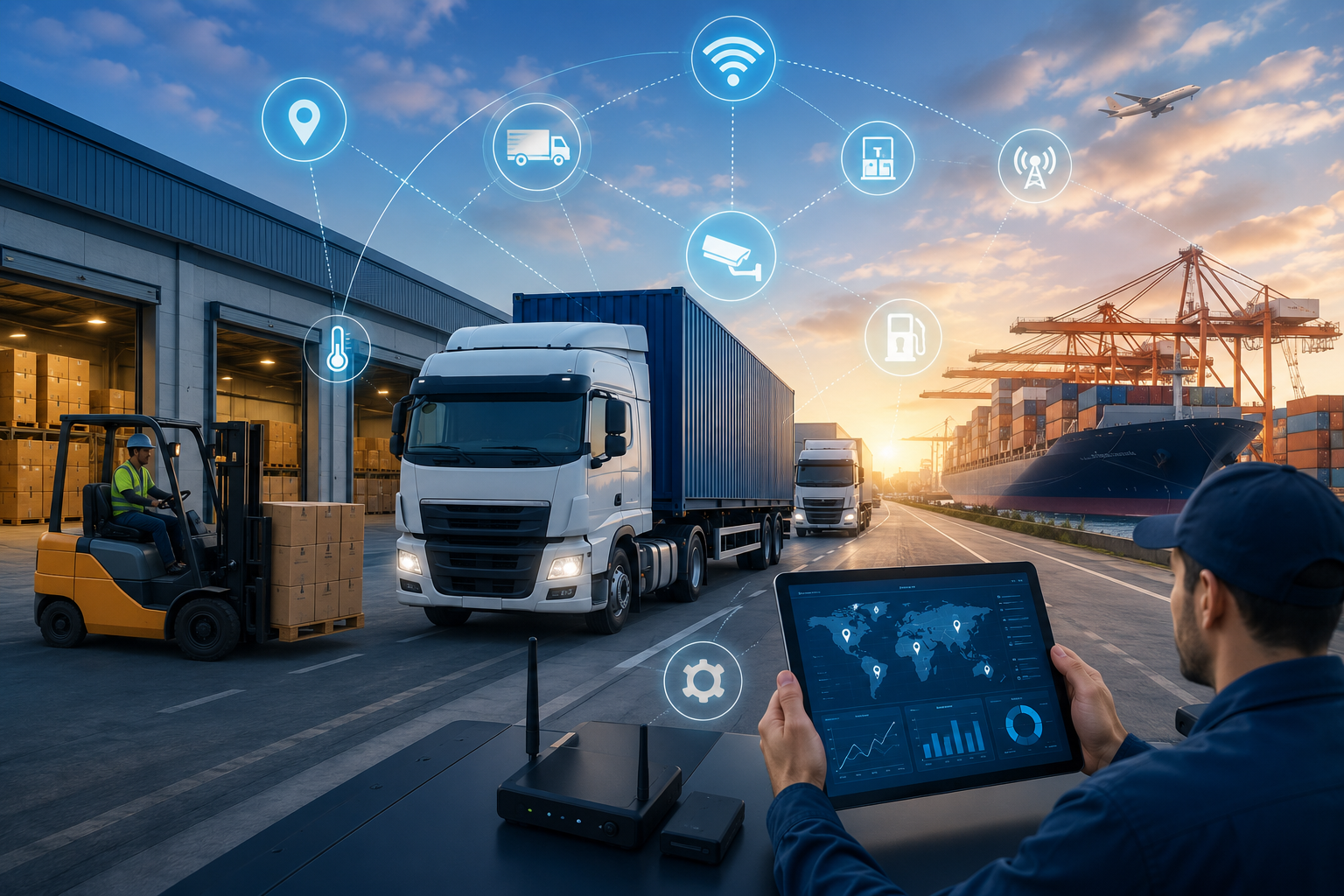
This is where IoT remote monitoring has become an essential part of modern logistics. By connecting vehicles, equipment, and cargo through Internet of Things (IoT) devices, logistics companies can monitor operations around the clock, identify issues early, and make faster decisions. As supply chains become more complex, IoT remote monitoring helps businesses improve efficiency, reduce costs, and deliver better customer experiences.
What Is IoT Remote Monitoring?
IoT remote monitoring uses connected sensors and smart devices to collect and transmit real-time data from vehicles, shipments, warehouses, and equipment. These devices continuously monitor important information such as:
- Vehicle location
- Temperature and humidity
- Fuel consumption
- Engine health
- Driver behaviour
- Cargo conditions
- Equipment performance
The data is sent to a central monitoring platform, allowing logistics teams to respond quickly whenever a problem occurs.
Improve Shipment Visibility
One of the biggest challenges in logistics is maintaining complete visibility throughout the delivery process. Customers expect accurate tracking information and timely updates.
IoT remote monitoring provides live GPS tracking, enabling logistics providers to know exactly where every shipment is at any time. Dispatchers can identify delays, reroute vehicles around traffic, and provide customers with accurate delivery estimates.
Better visibility also improves communication between drivers, warehouses, and customers.
Reduce Equipment Downtime
Fleet vehicles and transportation equipment require regular maintenance. Unexpected breakdowns can delay deliveries, increase repair costs, and disrupt operations.
IoT sensors monitor engine performance, battery condition, tyre pressure, and other critical systems in real time. Instead of waiting for equipment to fail, logistics companies can schedule maintenance based on actual equipment condition.
This predictive maintenance approach reduces downtime, extends vehicle lifespan, and lowers maintenance costs.
Protect Temperature-Sensitive Cargo
Many industries rely on logistics companies to transport products that require strict environmental control, including:
- Pharmaceuticals
- Vaccines
- Fresh food
- Frozen products
- Chemicals
IoT remote monitoring continuously tracks temperature, humidity, and storage conditions throughout transit.
If readings move outside acceptable limits, alerts are sent immediately, allowing teams to take corrective action before products are damaged. This helps maintain product quality and supports regulatory compliance.
Enhance Fleet Efficiency
Fuel is one of the largest operating expenses for logistics companies. IoT monitoring helps businesses optimise fleet performance by tracking:
- Fuel consumption
- Vehicle idle time
- Route efficiency
- Driver behaviour
- Vehicle utilisation
With this information, fleet managers can reduce unnecessary fuel usage, improve driving habits, and identify opportunities to lower operating costs.
Better route planning also leads to faster deliveries and improved customer satisfaction.
Strengthen Asset Security
Cargo theft and equipment loss remain significant concerns across the logistics industry.
IoT-enabled tracking devices provide continuous monitoring of vehicles, trailers, and valuable assets. If a vehicle deviates from its planned route or enters an unauthorised location, automatic alerts are generated.
This improves asset security and allows companies to respond quickly to suspicious activity.
Support Better Decision-Making
IoT remote monitoring generates valuable operational data that helps logistics companies improve long-term performance.
Managers can analyse trends such as:
- Delivery performance
- Fleet utilisation
- Equipment reliability
- Fuel efficiency
- Maintenance history
These insights support smarter planning, resource allocation, and continuous operational improvement.
Instead of relying on assumptions, businesses can make decisions based on real-time data.
Why Many Logistics Companies Outsource IoT Remote Monitoring
Managing IoT infrastructure internally requires specialised technical expertise and continuous monitoring.
Many logistics providers choose outsourced IoT remote monitoring services to gain:
- 24/7 monitoring support
- Real-time alert management
- Faster issue detection
- Experienced technical teams
- Reduced internal workload
- Scalable monitoring as fleets grow
Outsourcing allows logistics companies to focus on transportation operations while experienced monitoring professionals oversee connected devices and respond to incidents quickly.
Conclusion
As logistics networks continue to expand, real-time visibility has become essential for maintaining efficiency and customer satisfaction. IoT remote monitoring enables logistics companies to track vehicles, monitor cargo conditions, prevent equipment failures, improve fleet performance, and protect valuable assets.
Businesses that combine IoT technology with professional remote monitoring services can reduce downtime, optimise operations, and deliver a more reliable service to customers. For logistics companies looking to improve operational efficiency and stay competitive, IoT remote monitoring is no longer an optional investment—it's a key driver of smarter, more resilient supply chain management.




 Arabic
 French
 Spanish
 Portuguese
 Deutsch
 Turkish
 Dutch
Dutch
 Italiano
 Russian
 Romaian
 Portuguese (Brazil)
 Greek
Greek