


How Effective Hazard Management Strengthens Workplace Safety
How Effective Hazard Management Strengthens Workplace Safety
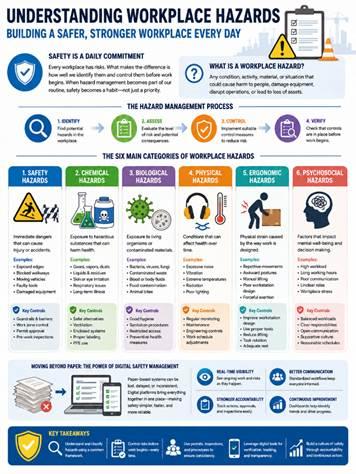
Every workplace carries some level of risk, regardless of the industry. Manufacturing plants, construction sites, hospitals, warehouses, and office spaces all have conditions that can potentially lead to accidents or operational disruptions. The difference between organizations that maintain strong safety records and those that regularly experience incidents is rarely the type of work they perform. Instead, it comes down to how consistently they recognize potential hazards and control them before work begins. When hazard management is embedded into everyday operations through structured inspections, permits, and standardized procedures, safety becomes an ongoing business practice rather than an occasional initiative.
Creating a Shared Understanding of Workplace Hazards
A workplace hazard refers to anything within the work environment that has the potential to cause harm. This may include unsafe conditions, work activities, equipment, materials, or environmental factors that could result in employee injuries, equipment damage, interruptions to operations, or loss of company assets. Hazards can originate from machinery, hazardous substances, work processes, surrounding conditions, or even the overall workplace design.
Although the concept seems simple, organizations often struggle because employees identify hazards differently. A supervisor may notice one concern, while frontline workers or safety personnel recognize entirely different risks. These varying perspectives can lead to inconsistent inspections, incomplete reporting, and inaccurate risk evaluations. Consequently, organizations may address obvious issues while overlooking the conditions that continue to create danger.
To improve consistency, many organizations organize workplace hazards into six well defined categories. This classification creates a common framework that helps employees identify risks more accurately, communicate concerns clearly, and apply the appropriate controls before work starts.
The Six Primary Types of Workplace Hazards
Safety hazards are generally the most visible category because they often involve immediate physical dangers. Examples include exposed edges, uncovered floor openings, blocked walkways, moving vehicles, damaged equipment, or defective tools. Since these hazards can quickly lead to injuries or accidents, preventive measures should always be established before work begins. Organizations commonly rely on protective barriers, designated exclusion zones, permit approvals, and pre work safety inspections to reduce these immediate risks.
Chemical hazards are often less noticeable but can be equally dangerous. Workers may come into contact with hazardous liquids, gases, vapors, dust, or chemical residues while carrying out routine activities. Depending on the type and duration of exposure, these substances may cause skin irritation, burns, respiratory illnesses, poisoning, or long term health complications. Effective management focuses on limiting exposure by selecting safer alternatives, improving ventilation, using enclosed handling methods, maintaining accurate labeling, and providing suitable personal protective equipment. Incorporating these requirements into permits and inspection processes helps ensure they are followed consistently.
Biological hazards involve exposure to living organisms or contaminated materials capable of causing illness. These risks are frequently encountered in healthcare facilities, laboratories, food processing operations, sanitation services, and outdoor work environments. Employees may be exposed to bacteria, viruses, fungi, or contaminated waste if proper precautions are not maintained. Managing these hazards requires consistent hygiene practices, effective sanitation procedures, restricted access to contaminated locations, and preventive health measures that are applied as part of normal operations rather than only during emergencies.
Physical hazards often develop their impact gradually instead of causing immediate injury. Excessive noise, continuous vibration, extreme heat or cold, radiation, and poor lighting may slowly affect worker health, comfort, and performance over extended periods. Organizations can reduce these risks through routine monitoring, scheduled maintenance, engineering controls such as shielding or enclosed systems, and work schedules that limit prolonged exposure.
Ergonomic hazards are associated with the physical demands of daily work. Repetitive movements, awkward postures, manual material handling, and poorly designed workstations can contribute to fatigue, discomfort, and musculoskeletal disorders over time. These risks can be minimized by improving workstation layouts, selecting appropriate equipment, reducing unnecessary lifting, rotating employees between tasks, and allowing adequate recovery periods. Regular inspections help confirm that these improvements continue to remain effective.
Psychosocial hazards relate to factors that influence an employee's mental wellbeing and ability to make sound decisions. Excessive workloads, long working hours, poor communication, unclear job expectations, and workplace stress can reduce concentration and increase the likelihood of mistakes. Addressing these risks involves balanced workforce planning, realistic schedules, clearly defined responsibilities, and open communication between employees and management. A positive workplace culture not only supports employee wellbeing but also contributes to stronger overall safety performance.
Making Hazard Management Part of Everyday Operations
Identifying hazards is only the first step in maintaining a safe workplace. Real improvement comes from ensuring every recognized risk is effectively controlled before work begins. A successful hazard management process typically follows a straightforward sequence: identify the hazard, assess the level of risk, implement suitable control measures, and verify that those controls are functioning before any task starts.
Following this structured process removes uncertainty from workplace decisions and creates greater consistency across all operations. Rather than depending solely on individual experience or personal judgment, organizations establish standardized procedures that guide everyone through the same process. This proactive approach allows hazards to be addressed before they develop into incidents, creating a safer and more predictable working environment.
Digital solutions further enhance hazard management by improving visibility, consistency, and accountability. Electronic permit systems provide better oversight for high risk work, structured isolation procedures help minimize human error, and mobile inspection checklists allow teams to confirm safe conditions directly at the work location. Together, these technologies connect planning with execution while making safety activities easier to monitor across the organization.
Replacing Paper Based Systems with Digital Safety Management
Traditional paper based safety processes often introduce unnecessary complications. Documents can be misplaced, delayed, or completed inconsistently, making it difficult to confirm whether hazards have been properly identified and controlled before work starts. Digital safety platforms simplify this process by bringing hazard identification, risk assessments, permits, inspections, and corrective actions together within a single, centralized system.
This integrated approach provides supervisors with real time visibility into ongoing activities while giving employees clear guidance on the safety requirements that must be completed before beginning their work. Standardized workflows also strengthen communication across departments and reduce the chances of critical safety steps being overlooked.
A practical way to improve workplace safety is to organize routine activities around the six recognized hazard categories while integrating standard control measures into permits, inspections, and everyday operating procedures. Mobile verification tools and performance dashboards help organizations monitor recurring issues, track overdue corrective actions, and continuously improve compliance. As these practices become embedded in daily operations, organizations strengthen accountability, reduce workplace incidents, and build a dependable safety culture founded on consistent hazard identification and effective risk control.
Book a free demo @ https://toolkitx.com/blogsdetails.aspx?title=Types-of-workplace-hazards:-examples,-and-how-to-control-them
Browse More
https://toolkitx.com/campaign/logistic-planning/
https://toolkitx.com/campaign/checklist/
https://toolkitx.com/campaign/certificate-management/
https://toolkitx.com/campaign/log-books/

 English
 Arabic
 French
 Spanish
 Portuguese
 Deutsch
 Turkish
 Dutch
Dutch
 Russian
 Romaian
 Portuguese (Brazil)
 Greek
Greek