


Battle-Ready Daggers and Rust: What to Know
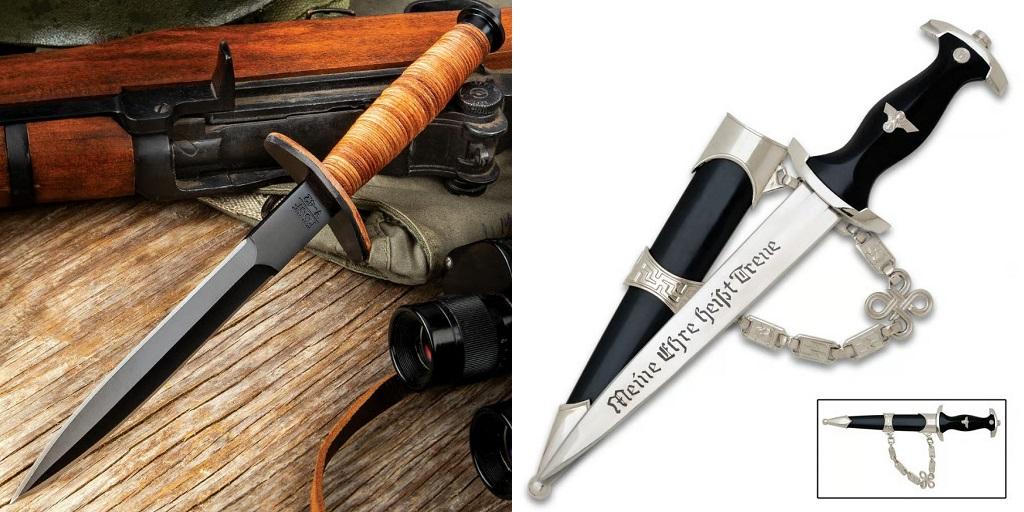
Your wallhanger dagger probably shines just like the day you brought it home, even if you displayed it in the open air, subject to all the high humidity of summer and the ravages of the rest of the seasons.
That’s likely because it’s designed to do just that. You couldn’t use it for live practice, but at least the steel alloy it’s made from won’t rust if you look at it the wrong way.
The same can’t be said for the majority of battle-ready daggers (or swords) that are made with steel alloys that are primarily designed to perform in combat, not to resist rust.
This short post will help you deal with that issue.
Dealing with Light Rust
For one, if you have a dagger with a lightly rusted blade, despair not. Though the finish may be marred, you can usually remove light rust and more or less restore the blade.
Some very fine steel wool and a little bit of oil is generally all you need. Buff the blade out towards the edge (being careful not to injure yourself) and you should be able to remove light rust in this manner.
A fine grit of sandpaper, between 1000-2000 grit, may also help you remove light rust. And, even if the finish is damaged, you may be able to restore it with 3000 grit or higher sandpaper or polishing pads.
Of course, removing rust is one thing, and it’s just as important to prevent it from coming back.
Prevention Is the Best Medicine
Keeping rust off your battle-ready dagger in the first place is a much more responsible way to go about this.
There are two good ways to treat a battle-ready blade with the intention of keeping rust off the blade. One is with oil, the other is with microcrystalline wax.
Oil is affordable and easy to apply, and it will help prevent rust, but the downside is that eventually oil will evaporate, so it will need to be periodically reapplied.
Microcrystalline wax, which is often used in museums to preserve historical artifacts, is a little harder to apply but it will last longer, so it will not need to be reapplied with the same frequency.
Either way, make sure you coat the blade to prevent rust, and when you do handle your blade, do so with white cotton inspection gloves to prevent the oils and salts in your skin from rubbing off on the blade.
Where to Store Battle-Ready Daggers to Prevent Rust
Lastly, where you store your battle-ready dagger will have a big impact on how well you can prevent rust and other noxious influences from gaining a foothold.
One, protect the dagger from direct exposure to sunlight. UV radiation won’t damage the blade, but it will damage the hilt’s fittings, whether leather, wood, or synthetic, over time.
Other than that, atmospheric conditions are the main drivers of rust. You should store or display the dagger in question in a climate controlled environment in which there will be no wide temperature swings, but more importantly, where humidity will be maintained at a low level.
Ideal conditions for storing a dagger are similar to what they are for storing a firearm; lower is better, and relative humidity levels between 30% and 50% are ideal.
Expand Your Collection
Here for a new battle-ready dagger to round out your collection? Remember, it won’t be a wallhanger so you will need to make sure you carefully maintain it to prevent rust.
Check out BudK and see if their collection has something that appeals to you; just don’t forget proper cleaning, handling and storage protocols to ensure protection for your investment.
For more information about Assisted Opening Knife and Anime Swords Please visit: BudK Worldwide Inc.

 English
 Arabic
 French
 Spanish
 Portuguese
 Deutsch
 Dutch
Dutch
 Italiano
 Russian
 Romaian
 Portuguese (Brazil)
 Greek
Greek