


India Vertical Farming Market: Revolutionizing Urban Agriculture for a Sustainable Future
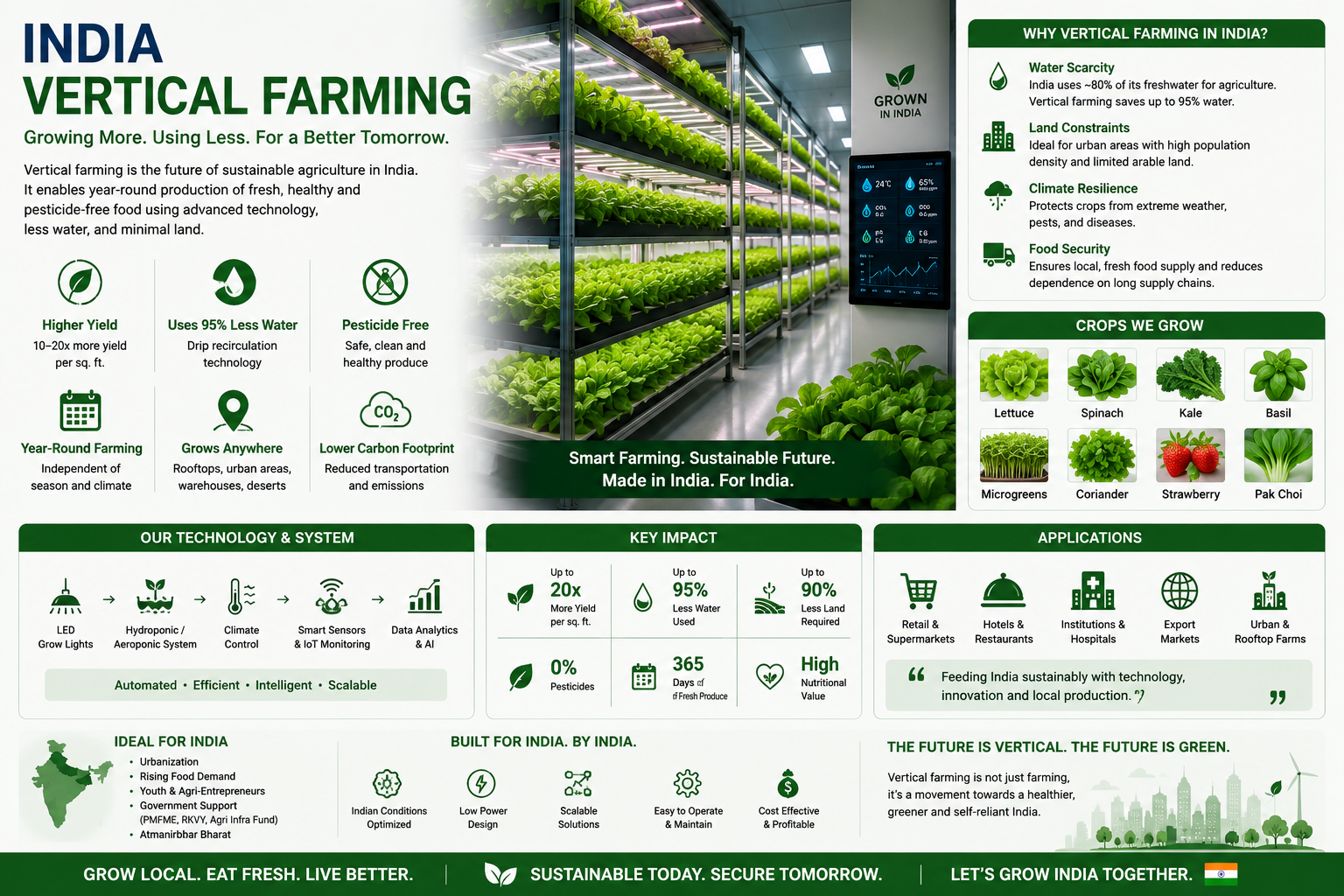
The India Vertical Farming Market is undergoing a significant transformation as the country seeks to balance its growing population with diminishing arable land. Vertical farming, the practice of growing crops in vertically stacked layers, often incorporating controlled-environment agriculture, is becoming a cornerstone of India’s modern agricultural strategy. By utilizing indoor spaces, rooftops, and repurposed shipping containers, this sector is providing a viable solution to the challenges of traditional soil-based farming. As climate change makes weather patterns increasingly unpredictable, the ability to produce high-quality, pesticide-free crops year-round is positioning this market as a critical component of India’s food security infrastructure.
Market Overview and Introduction
The concept of farming upwards rather than outwards is gaining immense traction in Indian metros like Bengaluru, Mumbai, and Delhi. Historically, India has relied on vast horizontal plains for its produce, but rapid urbanization and industrialization have led to soil degradation and water scarcity. The emergence of vertical farming represents a shift toward resource-efficient cultivation. This market is not just about growing leafy greens; it encompasses a complex ecosystem of technology providers, nutrient suppliers, and automated climate control developers.
Key Growth Drivers
Several factors are propelling the industry forward. Primary among these is the increasing demand for fresh, organic produce among the health-conscious middle class. Traditional supply chains in India are often plagued by inefficiencies, leading to significant post-harvest losses. Vertical farming minimizes these losses by bringing production closer to the point of consumption. Additionally, the government’s focus on "Digital Agriculture" and subsidies for modern farming techniques have encouraged many startups to enter the space.
Consumer Behavior and E-commerce Influence
Today’s Indian consumer is more informed and discerning than ever before. There is a growing preference for "farm-to-fork" models where the origin of the food is transparent. The rise of quick-commerce and grocery delivery apps has further accelerated the growth of indoor farming India, allowing vertical farms to reach consumers within hours of harvest. This digital integration ensures that the premium quality of vertically grown produce justifies its higher price point compared to traditional market vegetables.
Regional Insights and Preferences
While the movement started in Tier-1 cities, it is gradually spreading to Tier-2 cities where land prices are rising. South India, particularly Karnataka and Tamil Nadu, has become a hub for hydroponic farming systems due to the presence of numerous tech-savvy entrepreneurs and favorable investment climates. In the North, the focus is often on high-value crops like strawberries and exotic herbs that are difficult to grow in the regional heat using conventional methods.
Technological Innovations and Emerging Trends
Innovation is the lifeblood of this sector. We are witnessing a move toward fully automated farms where AI-driven sensors monitor humidity, CO2 levels, and nutrient concentrations in real-time. LED lighting technology has also evolved, allowing farmers to use specific light "recipes" to enhance the nutritional profile or flavor of the crops. The integration of IoT (Internet of Things) allows for remote monitoring, reducing the need for constant physical presence on the farm.
Sustainability and Eco-friendly Practices
Sustainability is a core value of the vertical farming proposition. These systems use up to 95% less water than traditional farming, a crucial advantage in a water-stressed country like India. Furthermore, by eliminating the need for chemical pesticides and herbicides, vertical farms protect local biodiversity and ensure that the runoff does not contaminate ground water. Many facilities are also exploring solar power to offset the electricity costs associated with artificial lighting.
Challenges, Competition, and Risks
Despite its potential, the market faces hurdles. The initial capital expenditure (CAPEX) for setting up a state-of-the-art vertical farm remains high. High operational costs, primarily driven by electricity consumption for HVAC and lighting, can impact profitability. Furthermore, the market is becoming increasingly competitive with numerous startups vying for the same high-end consumer segment, leading to price wars and the need for constant technological upgrades.
Future Outlook and Investment Opportunities
The future of vertical farming in India looks promising, with the market expected to expand into more diverse crop varieties, including medicinal plants and functional foods. Investors are increasingly looking at this sector as a "green investment" that offers both social impact and financial returns. As technology costs decrease and the scale of operations increases, we can expect vertically grown produce to become more accessible to the broader population.
➤➤Explore Market Research Future- Related Ongoing Coverage In Semiconductor Industry:
Automated Storage And Retrieval System Market

 English
 Arabic
 French
 Spanish
 Portuguese
 Deutsch
 Turkish
 Italiano
 Russian
 Romaian
 Portuguese (Brazil)
 Greek
Greek