


The Operational Backbone of Modern Enterprise: An Overview of the ITSM Industry
In the modern enterprise, technology is no longer a peripheral support function but the central nervous system that powers every aspect of the business. To manage this complexity and ensure that technology delivers consistent and predictable value, organizations rely on the principles and tools of the global It Service Management industry. IT Service Management (ITSM) is a strategic and process-oriented approach to designing, delivering, managing, and improving the way information technology is used within an organization. It moves beyond the reactive, "break-fix" model of traditional IT support and establishes a structured framework for service delivery. This framework, most famously codified in the ITIL (Information Technology Infrastructure Library) guidelines, focuses on aligning IT services with the needs of the business, enhancing user experience, and optimizing costs. It is the discipline that ensures an employee can seamlessly request a new laptop, that a critical software application remains available during peak business hours, and that any disruptions are resolved quickly and efficiently, all while providing visibility and control to IT leadership. This makes the ITSM industry a critical enabler of digital transformation and operational excellence.
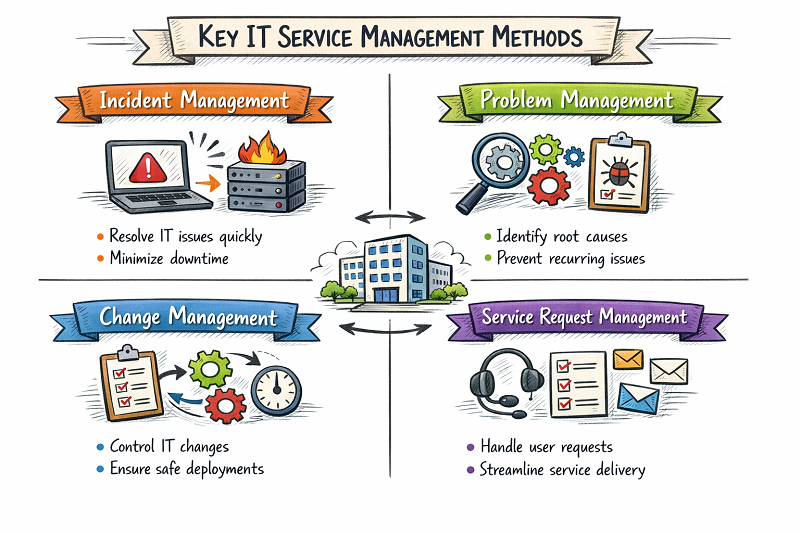
At the heart of the ITSM industry are a set of core, interconnected processes that provide structure to IT operations. Incident Management is the most visible of these, focused on restoring normal service operation as quickly as possible after an unplanned interruption, such as a server outage or a software bug. Closely related is Problem Management, which takes a more strategic view, seeking to identify and resolve the root cause of recurring incidents to prevent them from happening in the future. Change Management provides a formal process for managing modifications to the IT environment, ensuring that changes—like a software update or a network upgrade—are implemented in a controlled manner to minimize risk and disruption. Service Request Management provides a standardized process for fulfilling routine requests from users, such as requests for software access, new hardware, or password resets. Together, these processes create a system of record and a workflow engine that brings order, predictability, and accountability to the often-chaotic world of IT service delivery.
The evolution of the ITSM industry has been marked by a significant shift in philosophy from being technology-centric to being service-centric and, ultimately, user-centric. Early ITSM implementations were often rigid, process-heavy, and focused on the technical components of the IT infrastructure. While this brought a degree of control, it often resulted in a poor experience for the end-users who were trying to get their work done. The modern approach to ITSM places a much greater emphasis on the user experience and business outcomes. This means designing intuitive, user-friendly self-service portals where employees can easily find answers and request services, much like they would on a consumer e-commerce site. It means using automation to fulfill requests faster and providing proactive communication to keep users informed about the status of their tickets. The focus is no longer just on meeting technical Service Level Agreements (SLAs) but on improving employee satisfaction and productivity, recognizing that a positive employee technology experience is directly linked to better business performance.
This user-centric philosophy has culminated in the concept of Enterprise Service Management (ESM). This is the idea of taking the successful principles and technology platforms of ITSM and applying them to other business functions outside of IT. Departments like Human Resources, Facilities, and Legal also deliver services to employees, and they often struggle with inefficient, manual processes based on emails and spreadsheets. The ITSM industry is now providing the platforms for these departments to create their own service catalogs, manage employee requests, and automate their workflows. An employee can use a single, unified service portal to request a new laptop from IT, onboard a new hire with HR, and report a broken light fixture to Facilities. This expansion beyond IT represents a massive growth vector for the industry, transforming ITSM platforms into the central service delivery and workflow automation engine for the entire enterprise, solidifying their strategic importance.
Explore Our Latest Trending Reports:

 English
 French
 Spanish
 Portuguese
 Deutsch
 Turkish
 Dutch
Dutch
 Italiano
 Russian
 Romaian
 Portuguese (Brazil)
 Greek
Greek