


How the Strait of Hormuz Crisis Could Trigger a Global Economic Shock
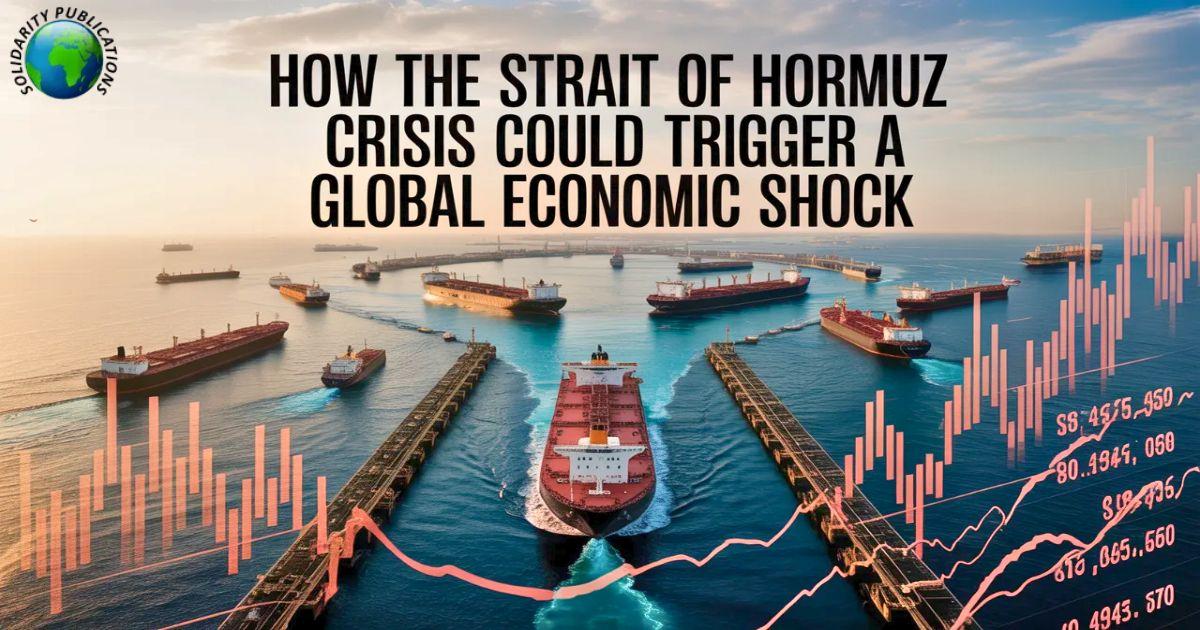
The Strait of Hormuz Crisis has become one of the most sensitive flashpoints in today’s global energy system. This narrow waterway carries a huge share of the world’s oil, so even small disruptions create major shocks. As tensions rise in the Persian Gulf, markets react fast with higher prices and fear.
Many experts warn that any blockage could trigger a global energy crisis and push economies toward instability. Countries dependent on imports feel the pressure first, while exporters face sudden shifts in demand. Overall, the situation shows how fragile modern trade routes are and how quickly global oil supplies can be affected by geopolitical conflict and rising uncertainty.
Why the Strait of Hormuz Is Critical for the Global Oil Supply
The Strait of Hormuz is one of the most important strategic oil supply routes in the world. Around one-fifth of global oil supplies pass through it daily. This makes it a key artery for energy trade.
When this route faces risk, the entire global oil market reacts instantly. Even small tensions can trigger a crude oil price surge and increase energy security concerns across major economies.
Key flow importance
|
Region |
Dependency on Hormuz Oil |
|
Asia |
Very High |
|
Europe |
Moderate |
|
USA |
Indirect Impact |
|
Middle East |
Export Hub |
A disruption creates energy trade disruption, oil distribution crisis, and rising oil import pressure worldwide.
How the Hormuz Crisis Started and Why Global Tensions Are Rising
The current crisis is linked to the long-running Iran oil conflict and wider regional instability. Clashes in the Persian Gulf oil crisis have increased fears of a Strait of Hormuz closure.
Countries like Saudi Arabia, Kuwait oil exports, and the United Arab Emirates depend heavily on stable shipping routes. Any tension quickly escalates into a geopolitical oil supply disruption.
This situation reflects deeper international energy instability and rising distrust between global powers. As a result, global market uncertainty keeps growing every week.
Comparing the Current Hormuz Crisis With Past Oil Supply Shocks
History shows that oil shocks reshape global economics. Events like the Yom Kippur War, Iranian Revolution, Iraq–Iran War, and Persian Gulf War all triggered major oil disruptions.
However, today’s crisis is more dangerous because global demand is higher. Modern economies depend heavily on uninterrupted global oil supplies.
Historical comparison
|
Event |
Oil Impact |
|
1973 Yom Kippur War |
Price spike |
|
1979 Iranian Revolution |
Supply shock |
|
1990 Gulf War |
Market panic |
|
2026 Hormuz Crisis |
Global risk surge |
Today’s situation increases global economic turbulence and raises fears of a world economic shock.
How Oil Price Surges Are Hurting the Global Economy
When supply drops, prices rise fast. A crude oil price surge affects transport, manufacturing, and consumer goods. It increases energy-driven economic slowdown worldwide.
The Federal Reserve Bank of Dallas notes that oil shocks directly impact global economic fluctuations and reduce global real GDP growth.
Even small disruptions can trigger global GDP slowdown and weaken economic recovery across developed and developing countries.
Why Energy-Importing Countries Face Greater Economic Pressure
Countries that depend on imports suffer the most during an oil export disruption. They face rising costs and shrinking budgets.
This creates oil import pressure, currency weakness, and balance-of-payments strain. Over time, it leads to economic growth decline and rising debt risks.
Oil exporters like Saudi Arabia may gain short-term revenue, but import-dependent nations face worldwide inflation pressure and unstable growth patterns.
How Shipping Disruptions Are Affecting International Trade and Supply Chains
The crisis is not only about oil. It also affects global shipping routes. Tanker shipping disruptions increase freight and insurance costs sharply.
Disruption in international oil shipping risks leads to delays in goods and raw materials. This creates global trade instability and slows down supply chains.
Main affected areas
Shipping lanes near the Bab el-Mandeb Strait and Suez Canal shipping routes also face pressure. This spreads the crisis far beyond the Middle East.
The Impact of Rising Fuel Costs on Inflation and Food Prices
Fuel is the backbone of transport and agriculture. Rising prices increase energy transportation crisis risks globally. Farmers face higher fertilizer and logistics costs.
This leads to worldwide inflation pressure and rising grocery bills. The oil tanker insurance crisis also increases shipping costs further.
A hidden impact is oil inventory shortages, which push governments to release reserves and stabilize markets.
How the Strait of Hormuz Crisis Could Slow U.S. and Global GDP Growth
A supply shock can slow down entire economies. The geopolitical supply shock reduces production and investment. It weakens consumer confidence globally.
The shale oil boom in the U.S. helps reduce dependency, but not fully. The U.S. petroleum trade balance still feels global pressure.
Experts at the Federal Reserve Bank of Dallas warn that prolonged disruption could trigger global recession risks and long-term economic growth decline.
Can Diplomacy, Clean Energy, and Global Cooperation Prevent a Larger Crisis?
Diplomacy remains the strongest tool. Negotiations between oil producers and global powers can reduce tension in the Persian Gulf.
Countries are also exploring energy alternatives. Clean energy reduces global energy dependence and long-term vulnerability.
However, instability continues in oil production shortfalls, oil shipment disruptions, and rising oil tanker attacks, making cooperation difficult.
What the Future of the Global Economy Could Look Like After the Hormuz Crisis
If the crisis continues, the world may enter a new energy era. Countries will diversify supply chains and reduce reliance on single routes.
New pipelines like the Saudi East-West pipeline, Yanbu port, and Fujairah pipeline may gain importance. However, risks in the Red Sea oil transport and oil tanker market dislocations will remain.
Long term, global energy systems may shift toward stability, but only if international oil transport crisis risks are managed effectively.
Conclusion
The Strait of Hormuz crisis is more than a regional issue. It is a global economic stress test. It impacts trade, inflation, and growth everywhere.
If tensions rise further, the world may face deeper global economic instability and a stronger push toward energy transformation.

 English
 Arabic
 Spanish
 Portuguese
 Deutsch
 Turkish
 Dutch
Dutch
 Italiano
 Russian
 Romaian
 Portuguese (Brazil)
 Greek
Greek