


Industrial Robotics Market Is Expanding Rapidly as Industry 4.0, Smart Manufacturing, and Labor Shortages Accelerate Global Automation
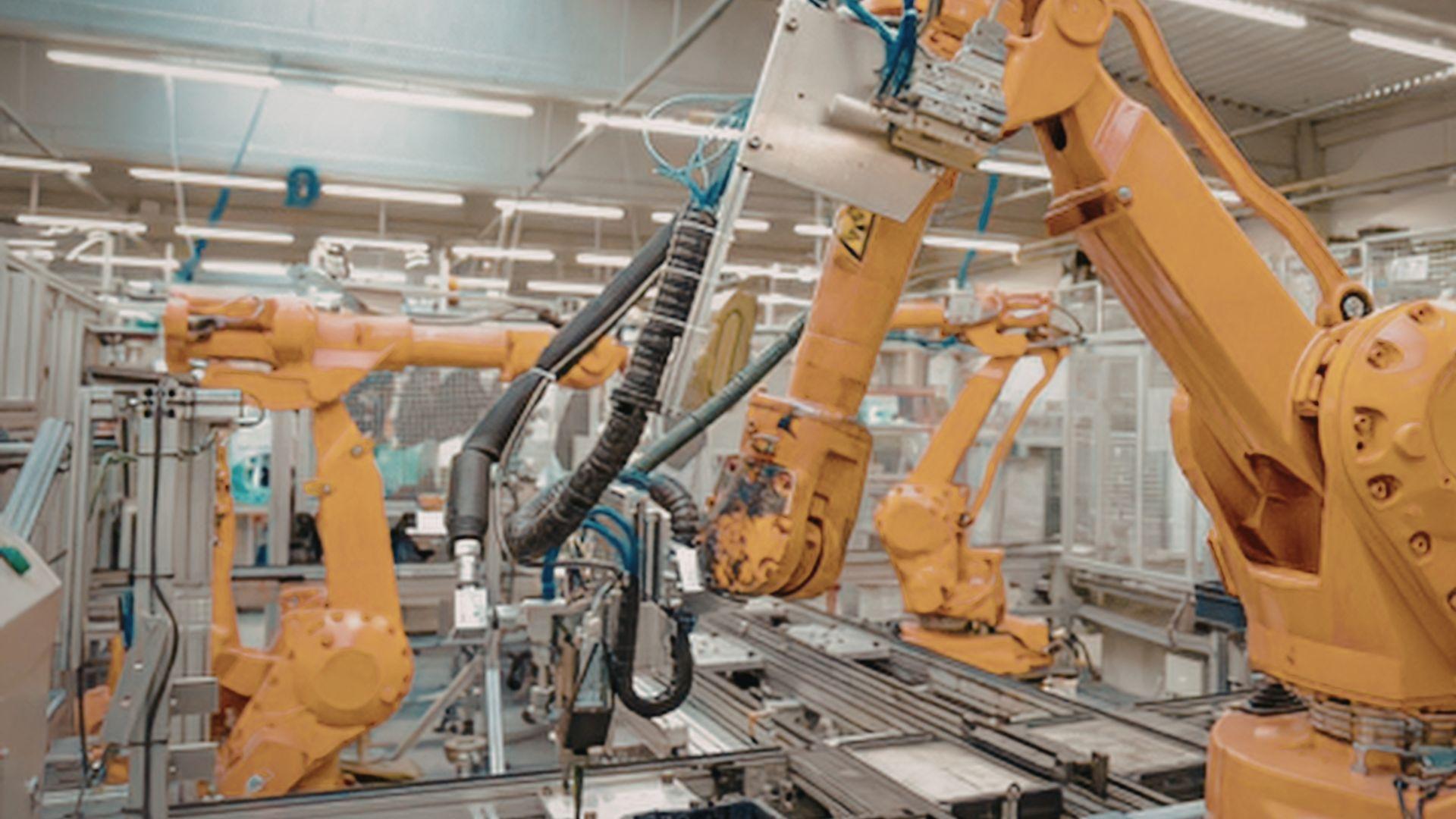
The global manufacturing industry is entering a new era of intelligent automation driven by rapid technological innovation, rising labor costs, and increasing demand for operational efficiency.
Industrial robotics has become one of the most critical pillars of modern manufacturing as companies across industries increasingly adopt robotic systems to improve:
- Productivity
- Precision
- Workplace safety
- Production scalability
- Operational consistency
Industrial robots are now widely used for tasks including:
- Assembly
- Welding
- Material handling
- Packaging
- Inspection
- Painting
- Machine tending
According to Renub Research, the Industrial Robotics Market is expected to grow from US$ 30.27 billion in 2025 to US$ 59.46 billion by 2034, expanding at a CAGR of 7.79% between 2026 and 2034. Rising automation demand, technological advancement, and increasing robotics adoption across manufacturing industries are among the major factors driving long-term market growth.
As manufacturers worldwide face mounting pressure to improve efficiency while maintaining high product quality standards, industrial robotics is rapidly evolving from a specialized technology into a mainstream industrial necessity.
Industry 4.0 Is Accelerating Robotics Adoption Worldwide
One of the strongest growth drivers behind the industrial robotics market is the rapid expansion of Industry 4.0 technologies.
Industry 4.0 emphasizes intelligent manufacturing ecosystems where machines, systems, and software communicate seamlessly in real time.
Industrial robots play a central role in this transformation because they enable:
- Automated production workflows
- Smart factory integration
- Real-time monitoring
- Predictive maintenance
- Data-driven manufacturing optimization
Modern robotic systems increasingly integrate technologies such as:
- Artificial intelligence
- Machine learning
- Computer vision
- Cloud computing
- IoT connectivity
- Advanced analytics
This connectivity allows robots to interact with:
- Sensors
- Manufacturing systems
- Production software
- Human operators
in highly coordinated environments.
One major development occurred in February 2024 when KUKA AG introduced its KR FORTEC industrial robot capable of carrying payloads up to 529 pounds with extended reach capabilities designed for tasks such as spot welding and industrial handling.
As manufacturers continue digitizing operations, robotics integration is expected to become increasingly essential across global production facilities.
Download Free Sample Report:https://www.renub.com/request-sample-page.php?gturl=industrial-robotics-market-p.php
Collaborative Robots Are Transforming Factory Floors
Collaborative robots, commonly known as cobots, are becoming one of the fastest-growing segments within the industrial robotics industry.
Unlike traditional industrial robots that operate within isolated safety cages, cobots are designed to safely work alongside human employees.
These systems increasingly support manufacturing environments by handling:
- Repetitive tasks
- Heavy lifting
- Precision assembly
- Material transfer
- Hazardous operations
while human workers focus on:
- Complex decision-making
- Quality control
- Process optimization
Cobots are especially attractive because they offer:
- Easier deployment
- Lower programming complexity
- Flexible operations
- Improved workplace safety
In February 2024, BMW Manufacturing partnered with California-based robotics company Figure to integrate humanoid robots into automotive manufacturing operations for physically demanding and repetitive tasks.
The rise of human-robot collaboration is significantly expanding robotics adoption beyond large industrial corporations into mid-sized and flexible manufacturing environments.
Labor Shortages and Rising Wages Are Driving Automation
Global labor shortages and rising manufacturing wages are significantly increasing demand for industrial robotics.
Many manufacturing industries now struggle with:
- Skilled labor shortages
- Aging workforces
- Rising operational costs
- Employee turnover
Manufacturers increasingly use automation to maintain productivity and offset workforce gaps.
According to Renub Research, manufacturing wage inflation outpaced consumer-price growth by approximately 1.8 percentage points annually between 2020 and 2025 across OECD economies.
Several countries are experiencing severe workforce shortages:
- Japan’s working-age population declined by 6.2 million between 2020 and 2025
- Germany reported approximately 420,000 unfilled skilled trade positions in 2025
- The United States is projected to face a 2.1 million manufacturing worker deficit by 2030
These labor challenges are accelerating robotics deployment across industries including:
- Automotive manufacturing
- Electronics production
- Metal fabrication
- Packaging
- Food processing
Governments are also supporting automation through incentives and industrial modernization programs.
South Korea, for example, doubled subsidies for small manufacturers in 2025 by covering up to half of robotics investment costs for eligible businesses.
As labor shortages continue intensifying globally, robotics adoption is expected to accelerate further.
Additive Manufacturing and 3D Printing Are Creating New Opportunities
The integration of industrial robotics with additive manufacturing and 3D printing technologies is creating significant growth opportunities.
Robotic systems are increasingly used in advanced manufacturing applications involving:
- Metal deposition
- Polymer extrusion
- Construction-scale 3D printing
- Composite manufacturing
Industrial robots equipped with deposition heads can produce:
- Complex geometries
- Customized components
- Large-scale structures
with exceptional precision and flexibility.
One notable development occurred in November 2023 when ADDitec introduced the AMDroid laser-wire directed energy deposition robotic system designed for advanced titanium manufacturing applications.
Similarly, RIC Technology introduced the RIC-M1 PRO modular robotic arm printer at the World of Concrete 2024 event, expanding robotic applications in large-scale construction printing.
As additive manufacturing technologies continue evolving, robotics integration is expected to become increasingly important in advanced industrial production environments.
Automotive Industry Continues Leading Robotics Adoption
The automotive sector remains one of the largest consumers of industrial robotics worldwide.
Automotive manufacturers heavily rely on robotic systems for:
- Welding
- Painting
- Assembly
- Material handling
- Inspection
- Precision manufacturing
Robots help automotive companies achieve:
- High production efficiency
- Product consistency
- Improved worker safety
- Faster production cycles
The transition toward electric vehicle manufacturing is further increasing robotics demand because EV production often requires highly automated and precise assembly operations.
Collaborative robots and AI-enabled automation are also becoming more common within automotive production lines to support flexible manufacturing systems.
Electronics Manufacturing Is Accelerating Robotics Integration
The electronics industry increasingly depends on robotics to manage highly precise manufacturing processes.
Robots are widely used for:
- Semiconductor handling
- Circuit board assembly
- Precision soldering
- Micro-component placement
- Quality inspection
Electronics manufacturers require robotic systems capable of delivering:
- High-speed production
- Microscopic precision
- Minimal error rates
As demand for consumer electronics, semiconductors, and smart devices continues rising globally, robotics adoption across electronics manufacturing is expected to remain strong.
Food Processing Industry Is Increasing Automation
The food processing sector is becoming an increasingly important market for industrial robotics.
Food manufacturers increasingly use robots for:
- Packaging
- Sorting
- Palletizing
- Quality inspection
- Sanitary handling
Automation helps food companies improve:
- Hygiene standards
- Production speed
- Product consistency
- Labor efficiency
Rising food safety requirements and increasing labor shortages within food manufacturing facilities continue accelerating robotics adoption throughout the industry.
China Continues Dominating the Global Robotics Market
China remains by far the world’s largest industrial robotics market.
According to Renub Research, China accounted for approximately 54% of global industrial robot deployments in 2024 with nearly 295,000 units installed.
The country’s operational robotic stock exceeded 2 million units, making it the world’s largest installed robotics base.
China’s strong robotics growth is supported by:
- Massive manufacturing activity
- Government industrial policies
- Smart factory initiatives
- Domestic robotics innovation
Chinese manufacturers are also gaining significant market share against international robotics suppliers within the domestic market.
The country continues investing aggressively in advanced manufacturing automation to maintain global manufacturing competitiveness.
Japan Remains a Global Robotics Leader
Japan continues holding a major position within the industrial robotics market due to its advanced manufacturing ecosystem and long-standing robotics expertise.
Japan installed approximately 44,500 industrial robots in 2024 while maintaining an operational stock of more than 450,000 robotic units.
Japanese robotics companies remain global leaders in:
- Precision robotics
- Automotive automation
- Electronics manufacturing systems
- Collaborative robot development
The country’s aging workforce and labor shortages continue encouraging long-term automation investment across industrial sectors.
India’s Robotics Market Is Expanding Rapidly
India’s industrial robotics market is growing rapidly as manufacturers increasingly prioritize automation and smart manufacturing.
According to Renub Research, India installed approximately 9,100 industrial robots in 2024, representing a 7% annual increase and placing the country sixth globally in annual installations.
The automotive sector accounted for approximately 45% of robotics demand within India.
Growing Industry 4.0 adoption, labor optimization needs, and rising manufacturing competitiveness continue supporting market growth across sectors including:
- Automotive
- Electronics
- Pharmaceuticals
- Metal processing
India’s ongoing industrial modernization initiatives are expected to strengthen long-term robotics adoption further.
United States Continues Investing in Smart Manufacturing
The United States remains one of the largest industrial robotics markets globally.
Robot installations across the Americas exceeded 50,000 units for the fourth consecutive year in 2024, with the United States accounting for approximately 68% of regional deployments.
American manufacturers increasingly adopt robotics to improve:
- Productivity
- Supply chain resilience
- Workforce efficiency
- Domestic manufacturing competitiveness
Industries including automotive, aerospace, logistics, and electronics continue investing heavily in robotics integration and smart factory technologies.
High Initial Investment Remains a Key Challenge
Despite strong growth opportunities, industrial robotics deployment often requires substantial upfront investment.
Costs associated with:
- Robotic hardware
- Integration services
- Software systems
- Workforce training
- Facility modifications
can be significant, especially for small and medium-sized enterprises.
Although robotics can generate long-term operational savings, many businesses remain hesitant because of:
- High implementation costs
- Uncertain payback periods
- Capital expenditure limitations
Improving affordability and flexible financing solutions will remain important for expanding broader market adoption.
Skill Gaps and Integration Complexity Continue Limiting Adoption
Modern robotics systems often require highly specialized expertise for:
- Programming
- Integration
- Maintenance
- Data analytics
- System optimization
Many organizations struggle with shortages of skilled robotics professionals capable of managing advanced automation systems.
Integration complexity with legacy manufacturing systems can also create operational challenges.
Without proper workforce training and technical support, companies may fail to fully utilize robotics capabilities effectively.
Recent Industry Developments Highlight Rapid Expansion
The industrial robotics industry continues witnessing strong investment and strategic expansion activity.
Important recent developments include:
- In January 2026, ABB began construction of a US$ 40 million carbon-neutral robot controller facility in Västerås, Sweden.
- In October 2025, ABB committed US$ 180 million to expand collaborative robotics production capacity in Shanghai.
- In September 2025, FANUC partnered with Siemens to integrate CRX cobots into the Industrial Edge platform for predictive automotive maintenance.
- In July 2025, Yaskawa acquired a 60% stake in German integrator Veltec to strengthen European robotics services operations.
These developments highlight the industry’s strong momentum toward intelligent automation, collaborative robotics, and smart manufacturing ecosystems.
Key Market Segments
By Industry
- Automotive
- Electrical & Electronics
- Metal & Machinery
- Plastic & Chemical Products
- Food Industry
- Others
Major Regions
- Americas
- Europe
- Asia Pacific
- Rest of the World
Major Companies Operating in the Market
Leading companies in the industrial robotics market include:
- KUKA
- iRobot Corporation
- Intuitive Surgical Inc.
- Panasonic Corporation
- FANUC
- ABB Ltd
- Stryker Corporation
These companies continue investing heavily in AI integration, collaborative robotics, smart manufacturing systems, and industrial automation innovation.
Final Thoughts
The global industrial robotics market is entering a powerful growth phase driven by Industry 4.0, labor shortages, smart manufacturing expansion, and rising demand for operational efficiency.
Industrial robots are no longer limited to large automotive factories alone.
They are increasingly becoming essential across industries seeking:
- Productivity improvement
- Precision manufacturing
- Workplace safety
- Cost optimization
- Manufacturing scalability
According to Renub Research, the industrial robotics market is projected to grow from US$ 30.27 billion in 2025 to US$ 59.46 billion by 2034, reflecting substantial long-term opportunities for automation technologies worldwide.

 English
 Arabic
 French
 Spanish
 Portuguese
 Deutsch
 Turkish
 Italiano
 Russian
 Romaian
 Portuguese (Brazil)
 Greek
Greek